

WORC delivered a request to USDA and the Justice Department for rules to require competitive and transparent pricing of meatpackers’ captive supplies of livestock during the competition workshop in Fort Collins. Read news release and WORC's letter.
In early August, TransCanada dropped its application to the Department of Transportation for a waiver of standard limits on pressure in its proposed Keystone XL tar sands pipeline. But there is a catch. TransCanada could re-apply for the waiver after the pipeline is built. And TransCanada already has permission to operate the Keystone I pipeline at higher than normal pressure. Send a message to TransCanada - keep the pressure down!
Join ranchers, farmers, meatpacking workers, consumers, and local food and food justice advocates in Fort Collins, Aug. 26, for a free public forum examining how corporate consolidation has shifted power in the food system and why government action is overdue. Registration and information is available here.
The Department of Justice and Department of Agriculture are holding on corporate concentration and lack of competition in the agriculture in Fort Collins, Colorado, August 27. WORC's Gilles Stockton will participate in the trends in livestock panel of the workshop. The focus of this workshop is livestock. Learn more about the workshop.
Twenty-one Senators have signed a letter to the USDA in support of the proposed livestock and poultry rules that were released in late June. Farm advocates that have long-pressed for increased oversight of the meatpacking, hog processing and poultry integrator industries expressed support for the letter from the Senators. Read rest of news release.
Read letter
Rural America received electric power as part of the sweeping reforms brought in by Franklin Delano Roosevelt’s New Deal. Decades later, members interested in having an impact on their rural electric cooperative can find some help by using WORC’s How To Have an Impact on your Rural Electric Cooperative.
A tiny handful of giant meatpackers and processors has been underpaying and unfairly treating livestock producers for decades. Your help is needed to end market manipulation by the big meatpackers and bring fairness to livestock markets.
The Supreme Court made its ruling on the first-ever genetically modified crop case to go to the high court. In Monsanto v. Geerston Farms, the Court reversed parts of the lower court decisions. However, the judgment holds that the planting of Monsanto’s Roundup Ready Alfalfa cannot go forward at this time.
Read the Court’s decision
Read summary of the findings
Read press release by Center for Food Safety
WORC has put 20 years of effort into trying to correct anticompetitive livestock markets that have driven generations of farmers and ranchers from the land. This broken market has taken hundreds of millions of dollars out of the heartland and put it in the pockets of multinational corporations. USDA has finally issued rules to define what “undue and unreasonable practices” by the multi-national packers actually means. Click here to find out more
Read WORC news release
Read WORC commentary by Mabel Dobbs
Senator Leahy (D-VT) and Representative DeFazio (D-OR) are circulating a Congressional sign-on letter to their colleagues in Congress asking the U.S. Department of Agriculture to maintain the ban on GM alfalfa. Contact your Senators and Representative today to ask them to sign the “Dear Colleague Letter to USDA about Banning GM Alfalfa."
A new report by Synapse Energy Economics for the Civil Society Institute outlines a "transition scenario" that would step up energy efficiency and use of clean, renewable energy, allowing the country to retire all coal-fired power plants and over a quarter of existing nuclear reactors.
WORC supports real and effective climate solutions and clean energy investments. However, we cannot support the legislation proposed by Senators Kerry and Lieberman. Instead of retooling our energy infrastructure it focuses on providing money and resources for unproven technologies to preserve coal generation, offshore drilling and nuclear power.
WORC's statement and news release on the Kerry-Lieberman draft bill
Sen. Jon Tester of Montana announced he will introduce a common sense amendments to S. 510, the Food Safety Modernization Act. Contact your Senators to ensure that the federal reforms do not hobble the resurgence of vibrant local food systems, farmers and processors.
Read profiles of local producers affected by S. 510
Letter to Senators from more than 155 organizations supporting amendments
WORC tells the Department of Agriculture to redo its study on the deregulation of Monsanto’s genetically modified alfalfa. More than 200,000 people say USDA should not approve the crop in comments on the draft Environmental Impact Statement.
Read news release
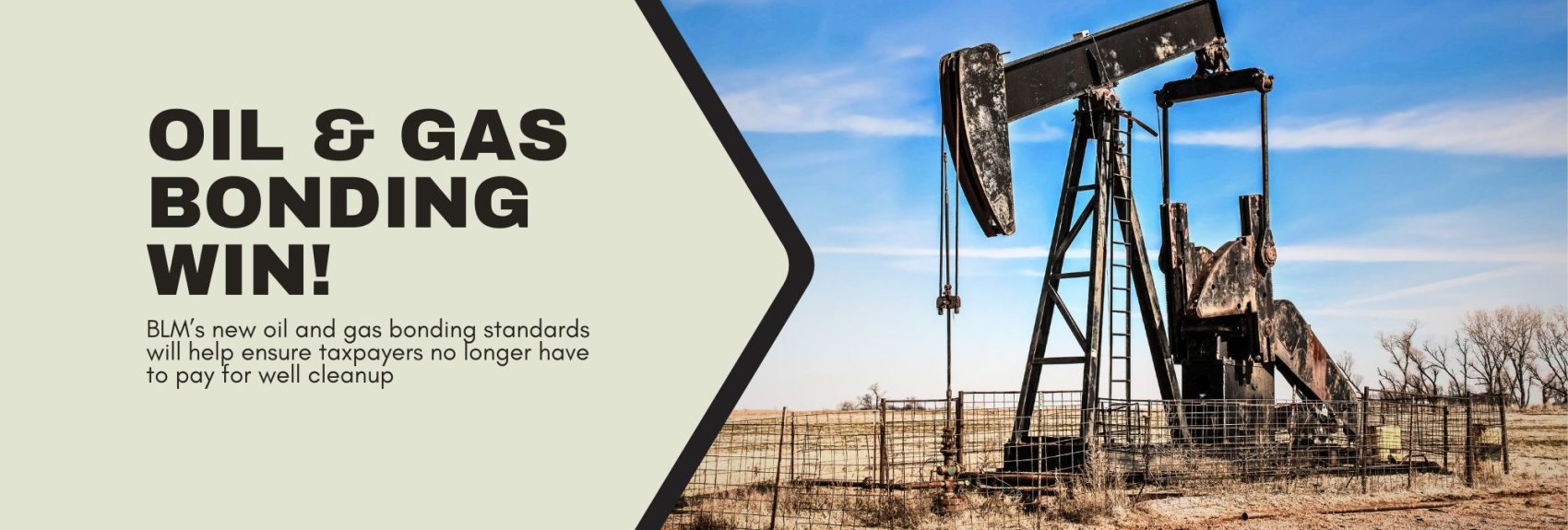
A new report by the Government Accountability Office found that oil and gas bonds were insufficient to pay for reclamation, but were based on minimum regulatory amounts. Read news release.
WORC examines the considerable challenges to develop carbon capture and sequestration technology in Bound to Fail: The Costs and Risks of Capturing and Sequestering Carbon from Coal-fired Power Plants. See CCS fact sheet.
As Congress contemplates major legislation on jobs, energy and climate change, WORC and its member groups called on Senators to adopt ambitious, yet readily achievable goals for renewable energy and energy efficiency for 2025.
Farmer and consumer groups from Australia, Canada, and the United States released a statement rejecting commercialization of genetically modified wheat and telling Monsanto that genetically modifying wheat is unacceptable.
WORC's Gilles Stockton welcomes decision to drop the "intrusive, expensive, and un-workable" program to identify and track livestock. Read Billings Gazette article.
Introduction of genetically modified (GM) wheat would drastically drop the price of wheat for farmers in the United States, according to a report released by WORC. A Review of the Potential Market Impacts of Commercializing GM Wheat in the U.S. concludes the price of U.S. hard red spring wheat would fall 40%, and the price of durum wheat would drop 57%. Read news release.
Modified wheat concerns group, Billings Gazette
See Billings Gazette article on alfalfa court case
WORC finds proposed rules on state meat inspection programs are “too narrow and inflexible.”
WORC submitted comments for two federal agencies to consider in workshops on competition issues affecting livestock markets and the seed industry and genetically modified crops.
Read Antitrust ag concerns get noticed, Billings Gazette
Just hours after it was introduced, WORC threw its support behind new bi-partisan climate legislation by Senators Maria Cantwell (D-Washington) and Susan Collins (R-Maine). Read news release.
On September 30, Senators John Kerry and Barbara Boxer introduced a bill dealing with global climate change, the Clean Energy Jobs and American Power Act. Although the bill makes a number of key improvements when compared to the bill passed by the U.S. House of Representatives,WORC believes it does not do enough to transition to a clean and renewable energy economy, and would lock in use of coal and other dirty fossil fuels. Read WORC's statement.
Voters in Montana and Colorado 3rd Congressional District strongly support protecting water from pollution, according to a survey conducted for WORC. Read more.
Within the more than 1,200 pages of the climate bill, investments in energy efficiency measures and the cap on carbon dioxide stand out as highlights. The legislation, however, does not address the negative impacts of energy development in this country and relies too heavily on coal and nuclear energy, and untested carbon sequestration technology. Read more about the bill and see WORC's fact sheet.
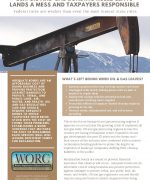
Based on a newly updated report, residents in existing and potential oil and gas drilling areas in the West are urging the federal government to adequately fund and carry out inspection and enforcement programs.
Released by the Western Organization of Resource Councils (WORC), the report found some improvement in the U.S. Bureau of Land Management’s (BLM) oil and gas inspection and enforcement programs, but the time and money invested in inspections and the number of inspections conducted were too low in 1999 and have barely kept up with oil and gas permitting and drilling.
Western ranchers welcomed introduction of a bill to stop unfair and manipulative practices by meatpackers that harm independent livestock producers.
drilling and hydraulic fracturing daily.
Click on Learn More to view photographs.