

Above: DRC member Bill Patrie stands in front of a solar thermal panel in Lightspring Solar’s Net-zero living renewable energy technology laboratory and classroom. Photo by Jim Kambeitz
A champion of rural electric coops, Bill Patrie is helping communities in North Dakota reclaim their power to address an energy crisis.
By Jessica Plance and Eric Warren. This article originally appeared in the Western Organizing Review.
Bill Patrie remembers the exact moment his family’s world changed—not with the flip of a light switch, but with the ring of a telephone.
Bill grew up on a farm in Wells County, North Dakota. In those days, there was no calling for help because there was no telephone service that reached his home. If you had an emergency, you couldn’t call the fire department, ambulance, or police; you had to drive to town. His mother, understanding how critical communication was, became involved in forming the Wells County Telephone Cooperative. She even kept the canceled $5 check she used to join—a small but powerful investment in a better future.
“That house in Wells County now has fiber optics to the door,” Bill says. The telephone cooperative never quit working for its members.
That experience of watching his mother come together with her neighbors to build something that works for their whole community stuck with him. It was his first glimpse into what people can achieve when they work with a shared purpose. Since then, Bill’s career has been deeply connected to rural electric cooperatives (RECs) and rural development at every level in North Dakota. Whether it was his time as director of the North Dakota Economic Development Commission under Governor George Sinner, or later as rural development director for the North Dakota Association of Rural Electric Cooperatives, or as a longtime member leader of the Dakota Resource Council, his focus has always been on ensuring that rural communities had not just electricity but also a voice in shaping their own futures.
“Bill is one of the wise grandfathers of the cooperative movement in North Dakota,” said Jim Kambeitz, another longtime DRC member who works in the solar field. “He’s one of the biggest advocates of everything local, agriculture co-ops, rural electric co-ops, and community-building networks.”
How rural electric cooperatives fell into the hands of Wall Street
RECs started as part of the New Deal in the 1930s. Investor-owned utilities had little interest in bringing electricity to sparsely populated rural areas, where profits were slim and infrastructure costs high. Local residents pooled resources and secured funding, often through the U.S. Department of Agriculture’s low-cost Rural Utility Service financing, to build the power plants and transmission lines that would bring prosperity to the region.
“Cooperation was the way people in rural North Dakota provided competitive services they couldn’t get through investor-owned providers,” Bill said. Because the co-ops were membership-owned, the members had the power to make decisions through elections of board members. It was democracy in action.
Keep up to date with grassroots organizing in the West with WORC’s newsletter.
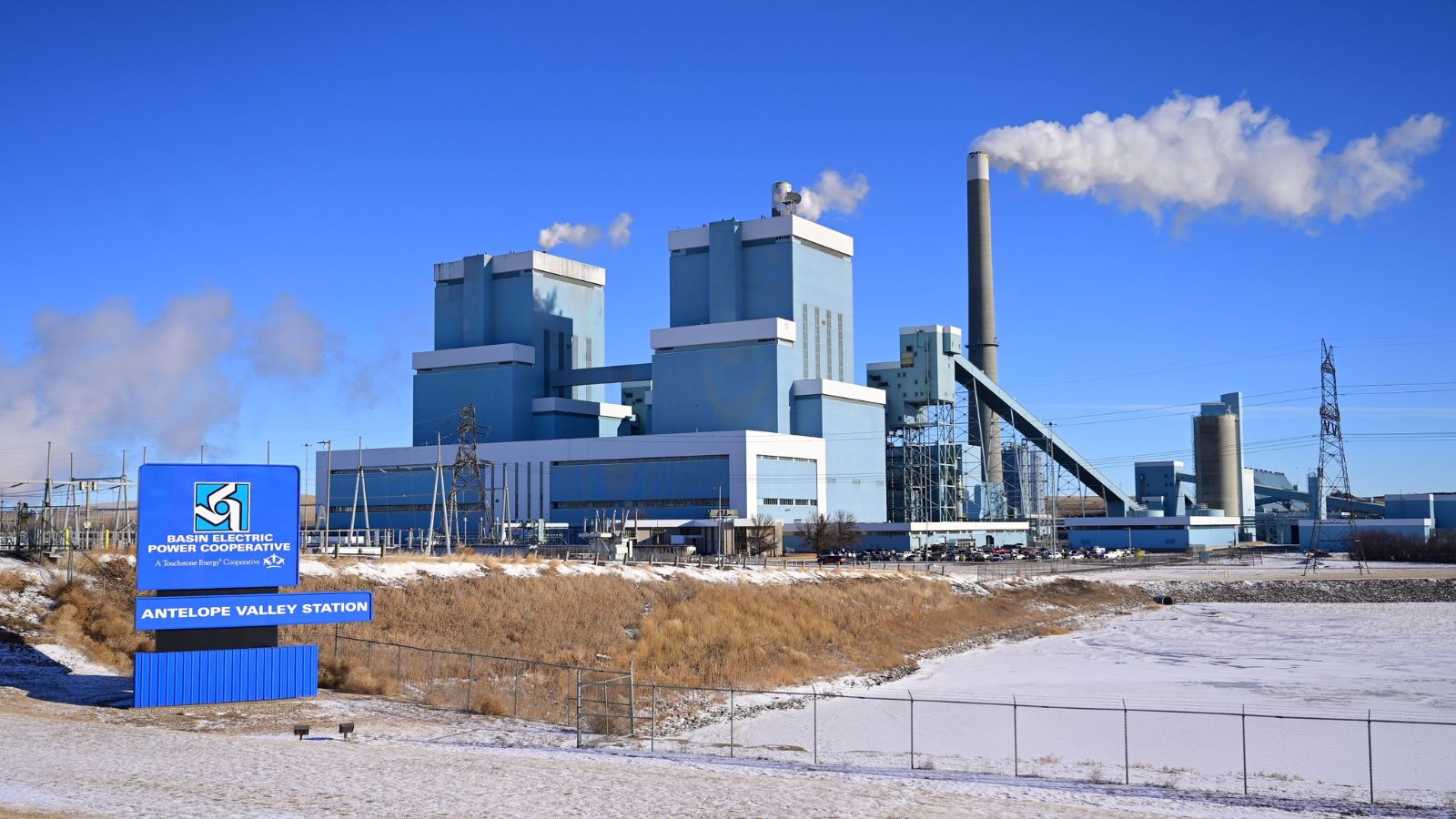
Fast forward a few decades, and co-ops like North Dakota’s Basin Electric have shifted drastically away from their democratic beginnings to resemble corporate structures that no longer answer to the people they serve.
“Community-led institutions, like co-ops, are what made North Dakota amazing,” Jim said. “Sadly, they’ve been rapidly disappearing over the last 30 years.” The co-op movement has been taken over by the corporate movement, and many North Dakotans don’t even know it. In reality, they aren’t being served like a co-op would serve them. Shareholders are getting the rewards at the inequitable cost of labor and external costs passed onto the public.
One of the biggest changes to North Dakota’s energy landscape was the buyout of the Rural Utility Service financing by Wall Street banks. With big banks funding Basin’s powerplants and other infrastructure, Basin and other co-ops have had to raise rates to cover the higher costs of borrowing.
“They have a complex business model that has shifted from serving their members to serving the people who finance them,” Bill said. “Then, who is your boss? Instead of the government as your partner, you have Wall Street as your banker, and Wall Street’s going to get paid.”
Getting co-ops to work for their members, not just their executives
Bill believes that executives’ decisions, influenced by servicing expensive loans, are driving a rural energy crisis in North Dakota. He’s been a trusted voice in how the corporatization of RECs is hurting rural electric customers, especially when it comes to energy affordability, grid diversification, and reliability.
“The focus of the board of directors is on recovering costs through innovative billing strategies,” Bill said. “They begin to rubber-stamp rather than lead. The result is the loss of their cooperative identity. Fewer and fewer members attend annual meetings. Many customers don’t even know they’re members of a cooperative.”
“Bill’s trying to figure out how to move co-ops into the 21st century,” said Scott Skokos, executive director of Dakota Resource Council, one of WORC’s 10 member groups. “Co-ops are being run by the executives, rather than members, and it’s causing a whole cascade of problems for regular people. One of his biggest concerns right now is energy-hungry data centers, which are driving up electricity prices and requiring new borrowing and leaving co-op members to shoulder the liability and the cost of new debt.”
“I think electric cooperatives are getting sucker punched by data centers and cryptocurrency mining centers,” Bill said. “Co-ops are being asked to build massive generation facilities requiring them to borrow billions of dollars, which goes directly on the balance sheets of those cooperatives.”
“I think electric cooperatives are getting sucker punched by data centers and cryptocurrency mining centers,” Bill said. “Co-ops are being asked to build massive generation facilities requiring them to borrow billions of dollars, which goes directly on the balance sheets of those cooperatives.”
Not only do these big expenditures mean higher rates for members, they also put North Dakota’s whole co-op system on shaky ground. If a crypto-mine or datacenter closes, there’s no secondary use for the power plants, like the recently approved $4 billion-Bison Generating Station in the northwest part of the state, or for the transmission lines built to serve them. The debt must be paid by further raising rates of existing members, or it threatens the cooperative with insolvency. The experience has left a lot of rural North Dakotans feeling powerless.
“It’s the people who care about the future of their community whose voice matters,” Bill said. “And if they want to reclaim that voice, I would recommend the first thing they do is get mad, because defiance is the key to getting organized.”
Getting organized
For Bill, community organizing takes many forms, but its essence is simple. “You don’t need to have an enemy to organize,” he said. “You can do it just for the sheer opportunity to serve yourself better.”
As a trusted leader at DRC, he’s shaped the co-op campaigns over the years, helping the organization protect cooperative principles and make sure that the people of North Dakota—not just big corporate interests—have a say in their energy future. He also inspired both DRC and the Western Organization of Resource Councils to support local leaders running for co-op board elections throughout the West and Midwest.
“Bill’s been a great leader in our co-op work,” Scott said. “Because of his background in cooperative development and experience as a board member of a rural cooperative board, Bill really cares about the cooperative structure and holding co-ops accountable to their members.”
“What Dakota Resource Council is doing is finding people who care about rural places and how they’re going to live and how their grandkids are going to live and bring them together,” Bill said. “You invite the members to co-create the future.”


Learn more:
Rural Electric Co-ops are critical to fighting climate change. Here’s why.
New ERA funding for renewable energy awarded to western rural electric co-ops

“Yes, I want to help WORC elevate Western voices and hold decision-makers accountable!