
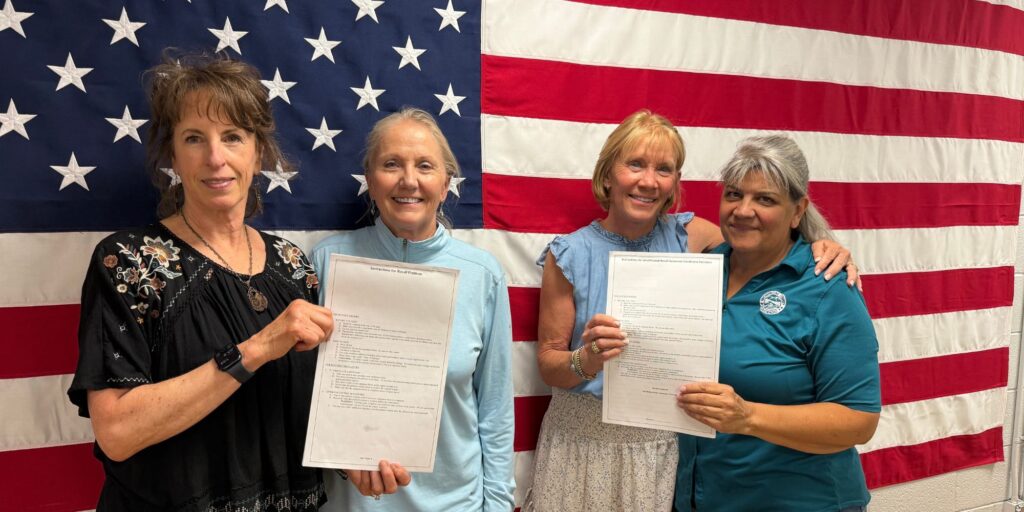
Above: Benziger and Gann picking up the approved petition with ballot language and Mijares’ response, officially beginning the signature-gathering window. Left to right: Montrose County Clerk and Recorder Tressa Guynes, Linda Gann, Phoebe Benziger, and Montrose County Chief Deputy Clerk Kimberly Wright
How a recall election brought a rural, conservative county together around shared democratic values.
By Eric Warren
Mary Mauer sat under the blazing sun at the edge of the Monte de Rosas Fiesta, a festival that happens every August in Montrose, Colorado. The scent of warm tortillas and chiles drifted from nearby food vendors. Latin music from the stage resounded. Mauer wondered if anyone would notice their table, where she and another volunteer were collecting signatures to recall Montrose County Commissioner Scott Mijares.
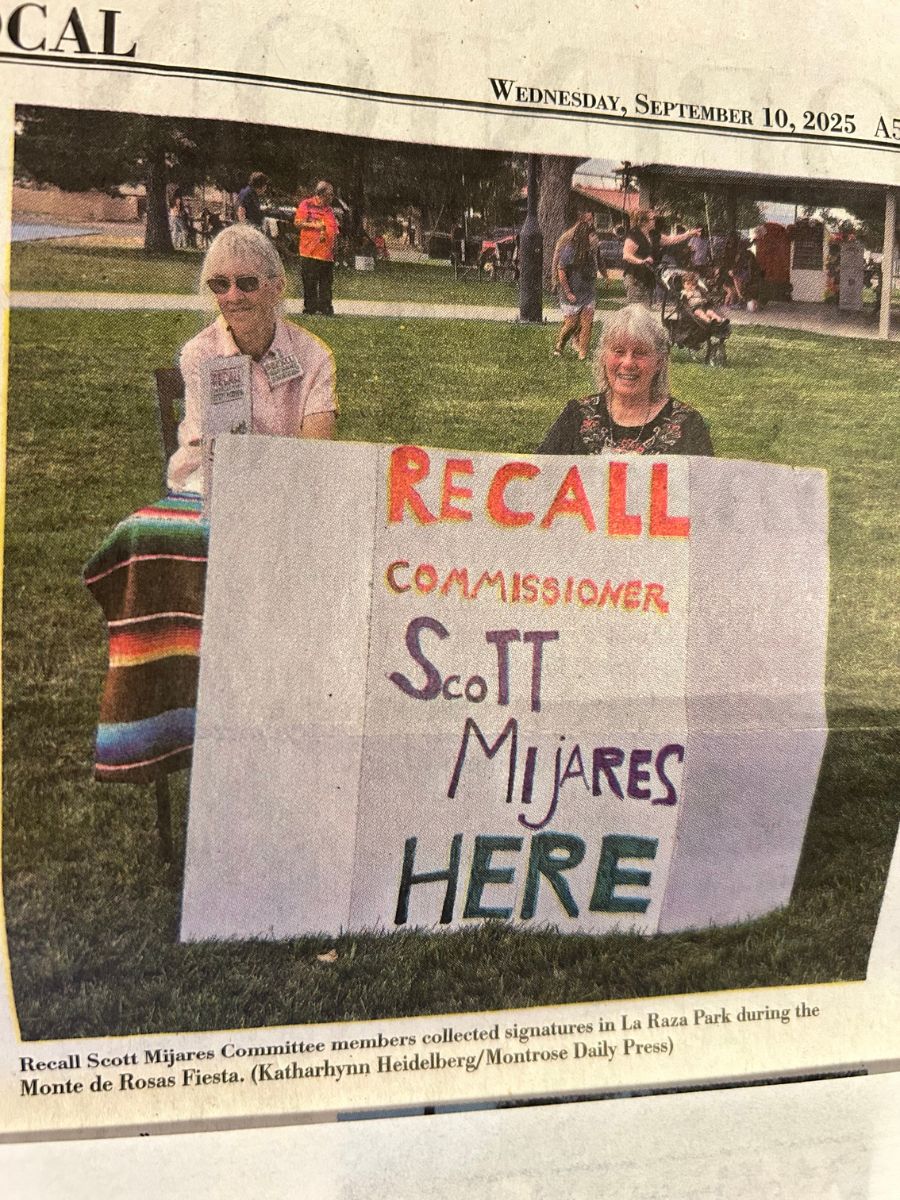
Festival organizers had earlier asked Mauer and another volunteer to move from their shady spot near the beer tent to the festival’s periphery after representatives of the Montrose County Republican Party complained. Their initial location seemed like a prime spot for collecting signatures. The county Republican Party thought so, at least, and sent one of their members to stand directly in front of the recall booth with a sign warning people not to sign the petition.
After being notified of the man’s actions, festival staff sent security to intervene, but he refused to leave and had to be physically removed from the recall campaign table. The Montrose County Republicans didn’t let up. They complained to festival staff that allowing the recall campaign to have a table so near the beer tent was unfair to the county commissioner they were trying to protect. With an apology to Mary and her co-organizer, the event coordinator asked the recall volunteers to relocate to the far side of the park.
Despite the sun and the distance from the action, or maybe because of it, a line began to form of people eager to get their names on the petition. “We couldn’t believe how many more signatures we got once we moved,” Mauer said with a laugh. “And they thought they were being mean to us.”
What happened at the Monte de Rosas Fiesta was by no means the first time that supporters of Mijares, or Mijares himself, had tried to intimidate his opponents. And it certainly wouldn’t be the last time it backfired on them. Trained and supported by Colorado Rural Voters (CORV), a non-partisan political organization and a member of WORC’s Grassroots Democracy Program, Mauer and some 150 other volunteers who were appalled by Mijares’s behavior had begun a month earlier to gather the number of signatures they needed to place the recall on the 2025 ballot. Their efforts, however, would amount to more than just recalling a toxic county commissioner who had no interest in representing the common good.
Over the last several years, civic engagement has sharply declined nationwide, especially in rural, strongly conservative communities like Montrose County. As a result, candidates have largely run unopposed, as demonstrated by the alarming fact that, nationwide, 70% of races on the 2025 ballot went uncontested, overwhelmingly at the local, city, county, and regional levels. In this political climate, authoritarian dynamics creep in. Candidates who are elected unopposed are more likely to govern recklessly, self-servingly, and without transparency, trusting they won’t be held accountable by their constituents. They’re often right.
Keep up to date with grassroots organizing in the West with WORC’s newsletter.
Voters in Montrose County—united around such values as good governance, transparency, and responsible management of taxpayer budgets—had other ideas and refused to tolerate Mijares’ autocratic behavior and irresponsible governance. In their effort to hold him accountable through electoral means, they would start to revive a declining democracy in their small corner of the country—something that, one might argue, needs to happen in many other small corners if we are going to restore democracy nationwide.
“Being able to organize in rural America across party lines and around common values for good, transparent local government is how we model functional democracy for the country,” said Kevin Williams, a volunteer with CORV.
How not to govern
Mijares was elected county commissioner in the 2024 general election after running unopposed.
His four-point agenda included “supporting Donald Trump’s America First Agenda at the local level”. Even before he was in office, he began showing up at county commission meetings demanding that the three current commissioners stop making critical decisions until he came on board in January 2025.
“It was that arrogance from the very beginning that got people fired up,” said Linda Gann, one of the co-chairs of the Recall Scott Mijares Committee, which formed in July 2025. “It was so blatantly inappropriate that it was obvious we’ve got to do something.”
Phoebe Benziger, the other co-chair of the recall campaign, noticed Mijares’ bad behavior early on but gave him a chance. “He was actually new to Montrose,” she said. “I thought, maybe he doesn’t get it. Maybe people will tell him, ‘You can’t act this way.’ But with every meeting, he kind of doubled down. It just cemented the fact that, yeah, we need to do this.”
Early in his term, Mijares joined with fellow Commissioner Sean Pond, who had been appointed to the seat after the previous elected commissioner passed away, and longtime Commissioner Sue Hansen, in unanimously confirming Mirza Ahmed as the county health director. Ahmed is a Bangladeshi immigrant and legal resident of the U.S. with years of experience in community healthcare, including setting up vaccination clinics for the World Health Organization in Somalia during the COVID-19 pandemic. While he met or exceeded all of the county’s qualifications, a fringe but vocal set of constituents questioned his credentials and immigration status. They branded Ahmed a “globalist,” a derogatory term used by the far right to describe a supposedly shadowy group that uses international connections to subvert national sovereignty.
In response, Mijares and Pond pivoted from supporting Ahmed to accusing the county manager of failing to properly vet him. They then forced both the manager and the county attorney out of their jobs, voted to demote Ahmed to “interim” county health director, and launched a search for his replacement.
Backlash from the majority of constituents was swift. Amid pressure, Mijares and Pond backtracked and voted to reinstate Ahmed. Their attempt to appease their xenophobic constituents, however, ended up costing the county an estimated $500,000 in severance packages and legal fees—a huge hit for a county with just over 44,000 residents.
“Scott Mijares was so arrogant in his dealings,” said Ray Langston, a former chair of the Montrose Republican Party who was part of the recall effort. “Everything was about him and not about what was best for the county. Once somebody is elected to office, they represent all the people in the community, not just the people who voted for them. Mijeras showed in spades he was only interested in the people that had put him in office and not the rest of the people.”
After the county health director debacle, Mijares and Pond ousted Hansen, a commissioner with seven years of experience, from the chair position, with Mijares becoming the chair and Pond the vice chair. The two allegedly began discussing county business in secret, cutting Hansen out and going so far as to make their decisions behind closed doors in apparent violation of Colorado’s open meeting laws.
Together, they rejected rules governing utility-scale solar that the county’s volunteer planning commission had unanimously recommended. The popular new safeguards would have allowed the county to lift a temporary land-use moratorium that effectively barred the development of renewable energy projects in Montrose County. Commissioner Hansen, the lone vote to end the two-year solar moratorium, told the other commissioners during a meeting that their personal feelings about renewable energy shouldn’t derail good, community-devised guidelines.
“We’re not in the solar business, we’re in the regulation business,” she said. “What we’re doing is putting enough things to safeguard the citizens of our community, but allow business to come here.” She cited the stifling effects of the solar moratorium, noting that counties throughout western Colorado have enjoyed the economic benefits of hosting solar projects, including good-paying jobs and stable electric bills. “I think that if we were talking about some other non-renewable [energy source], we wouldn’t be having this conversation,” she added.
Mijares and Pond kept the moratorium in place. They then drafted their own regulations that would have effectively shut down any solar development in the county, opening the county up to litigation or other liability under Colorado law.
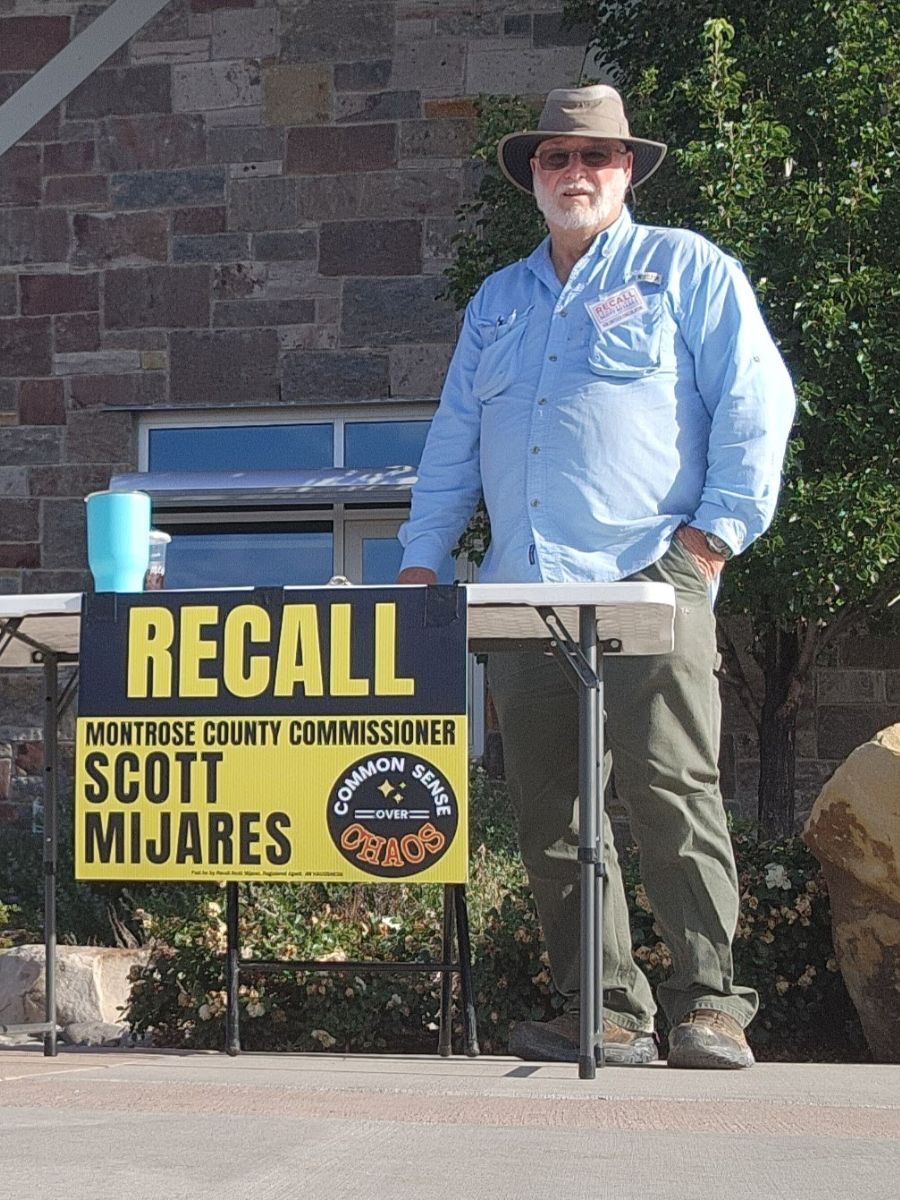
Perhaps more than anything, it was Mijares’ autocratic behavior as the chair of the county commission that inspired the effort to recall him, especially his move to eliminate public comments at county commission meetings (including the one that followed the forced resignations of the county manager and county attorney). He filled the extra time at the meeting with his own tirades.
One memorable tirade came when Mijares shouted down the county clerk, the two other county commissioners, and constituents in the chamber, all of whom attempted to restore some level of order. Normally, county residents who want to speak during a public comment period are given three minutes to make their cases. Mijares’ rant went on for 16 minutes.
“It’s unusual for the county commissioner to take up time during the public comment period of the county commissioner meeting,” Langston said. “Whenever they said, ‘okay, time’s up,’ he said, “No, no, no, I’m the chair. I can go on.”
Langston downloaded the video of that meeting to his phone and kept it on hand while out collecting signatures for the recall petition. When anyone asked why Mijares needed to be recalled, Langston would play the video and almost always get a new signature.
“The way he was treating the other county commissioners, it was just appalling,” said Beth McCorkle, another leader who joined the recall campaign. “It was the anger, the frustration, and the outright attitude of the way he was treating everybody. I came to these two ladies [Benziger and Gann], and I said I’m here for you.”
A multipartisan grassroots campaign takes shape
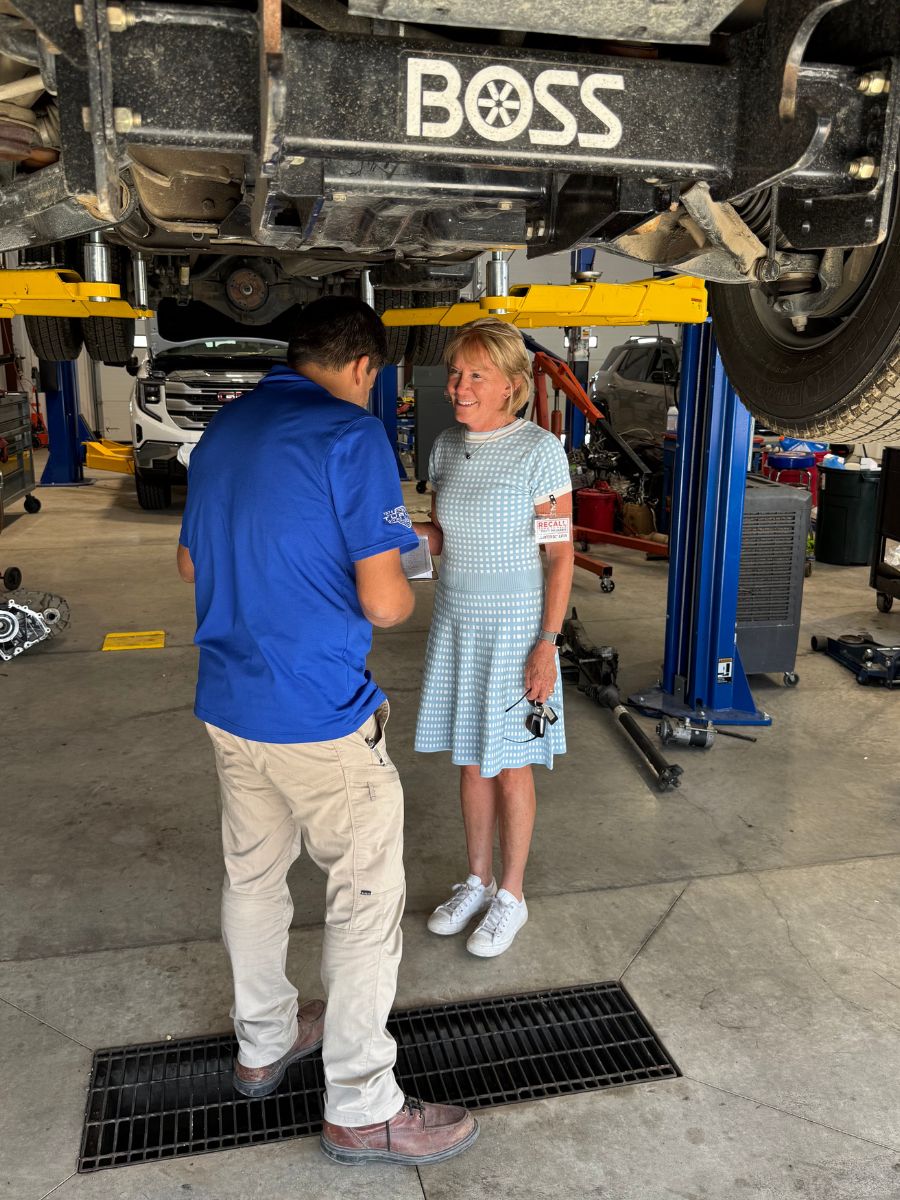
At the first meeting of petition gatherers on July 8, 2025, Benziger and Gann expected around 50 people to show. Almost 80 turned out. Joey Montoya Boese quickly became a leader, training volunteers and developing an extensive spreadsheet to keep everyone organized. She divided the volunteers into teams of ten, and on July 15, the first day they could legally gather signatures, they were out in force. The team embraced a grassroots strategy of meeting people where they were, showing up at places like the post office, the recreation center, the Friday music series, and the Monte de Rosa festival. Even the local Chevrolet dealership opened its doors to the effort. The number of volunteers grew until there were well over 100 people carrying clipboards around the county, and many others who helped in other ways, like building the website and coordinating canvassers. McCorkle had a project management background, making her a natural fit to manage an already robust team.
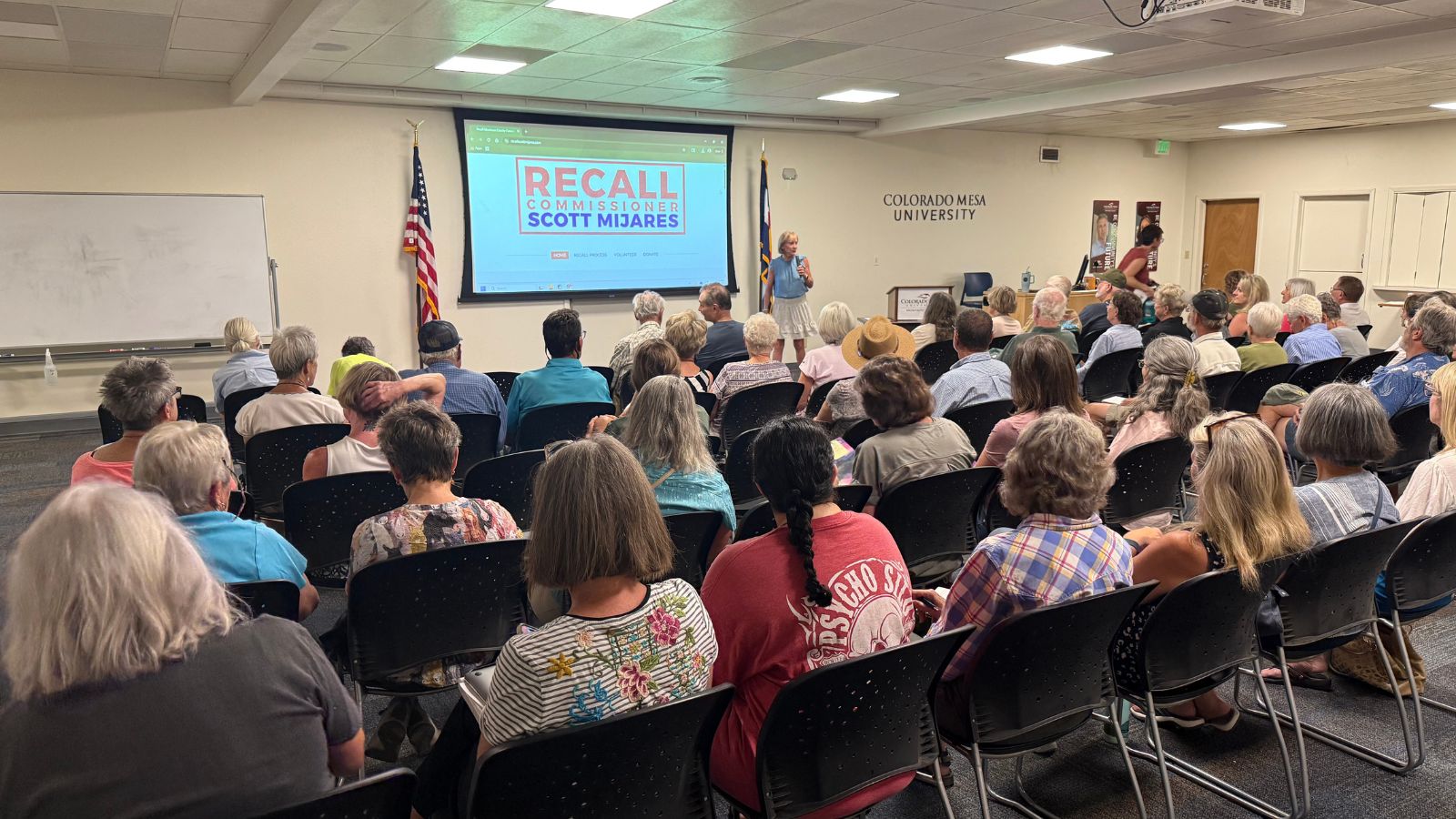
The fact that the effort was multipartisan was a point of pride for the recall organizers. Republicans, Democrats, and unaffiliated voters all found common ground. “Everybody went out, and we were all working for the same reason,” said McCorkle. “It totally changed my perspective on this community. We came together for a common cause, and it was just amazing to see how well people worked together.”
With less than five weeks to get over 4,500 signatures in a rural county where registered Republicans outnumber Democrats by three to one, the recall committee had its work cut out for it. They had dedicated grassroots volunteers. They also had a rural voters organization there to help move the recall forward.
Colorado Rural Voters (CORV), the nonpartisan political group that’s part of WORC’s Grassroots Democracy Program and run by volunteers from five Western Slope counties, including Montrose, also reached out to help early on. The organization’s driving mission is to fight for good representation in western Colorado and to elect candidates committed to responsible governance, regardless of political party affiliation. “This was a natural fit for Colorado Rural Voters,” said Williams. “We were able to equip volunteers with the tools, knowledge, and expertise to run an effective petition campaign and get as many signatures as they possibly could.”
But even with CORV’s help, the recall team knew it was going to be an uphill battle. With less than a week to go and having worked in tough conditions for weeks, volunteers still didn’t have the number of signatures they had set as their goal. To ensure they had enough valid signatures on the petition, the team decided they needed a few hundred extras to withstand a challenge from Mijares or his Republican Party backers.
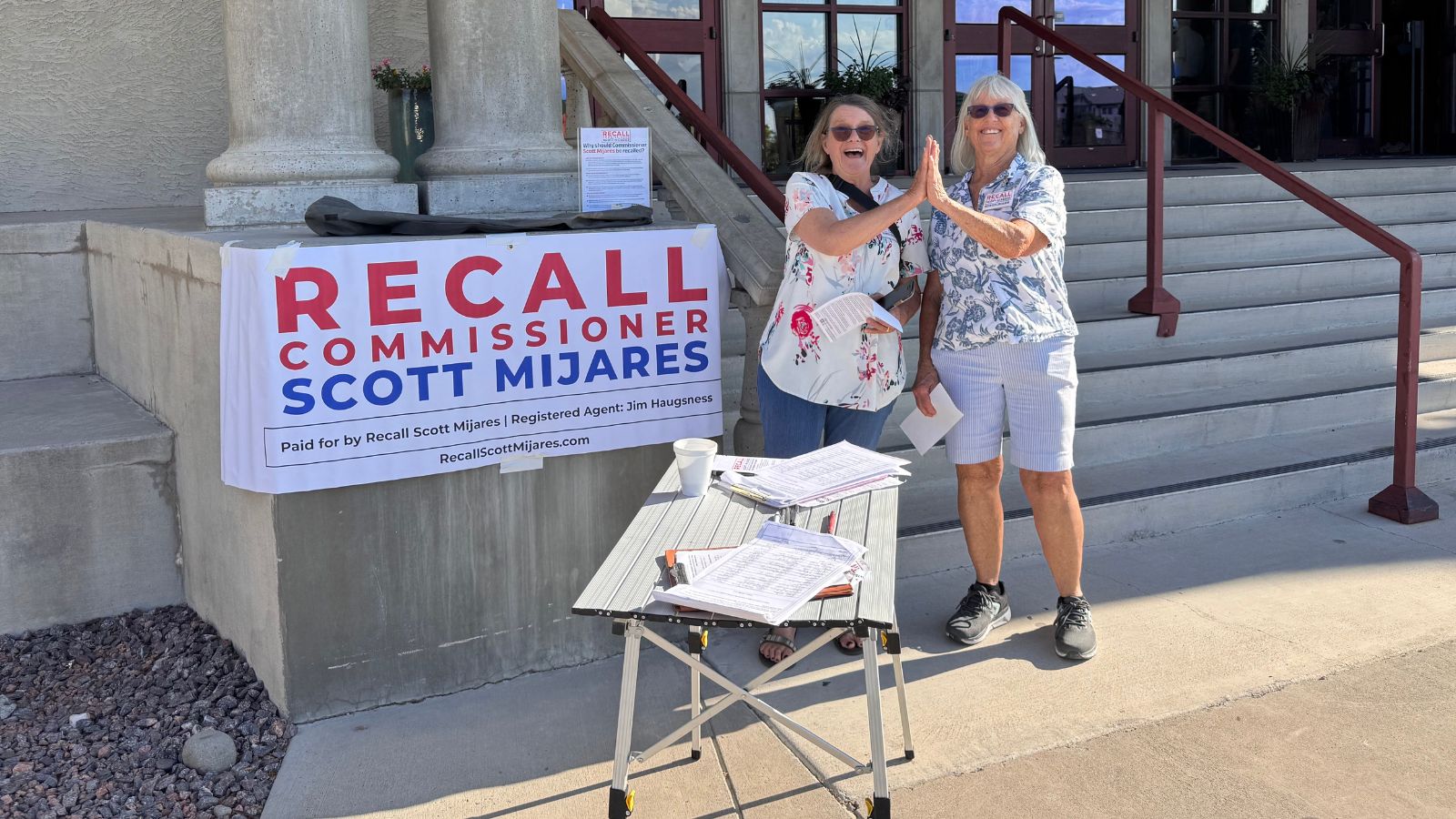
“I just remember looking at the team leaders,” Benziger said. “It was hot, and we were all exhausted. They’ve been out in the sun. They’ve been walking the streets. And it was all I could do not to burst out crying. I remember saying, ‘We can’t get this far and fail. We have to get 600 more.’”
On Monday, July 18, 2025, the recall campaign leaders hauled stacks of petitions, 5,428 in all, down to the Montrose County Courthouse. Later that week, Tressa Guynes, the county clerk, called Benziger with the results.
“Two words: deemed sufficient,” Benziger recalled. “Your petitions have been deemed sufficient. My favorite two words ever.”
“It was absolutely glorious,” Mauer said, remembering the moment she heard that the petition she’d spent so many hours on had withstood the county clerk’s assessment. “We were all in this big bar that had a dance floor, and it was just joyous.”
Accountability in action
Once the petitions were turned in, the campaign shifted into get-out-the-vote mode—from signature gathering to door-to-door canvassing and other types of outreach. At this point, CORV took on a key role, funding yard signs and handouts for people going door to door. CORV also used its canvassing experience to help organize the canvassing effort and plan targeted outreach to specific areas and voters. It trained canvassers to have persuasive conversations with voters of all stripes, particularly conservative voters. The recall campaign also worked with CORV to create radio ads and send mailers out to 20,000 homes in the community.
“All of our messaging was about asking voters to stand up for their values and demand a transparent, fiscally responsible county government accountable to its constituents,” Tyler McDermott, an organizer with CORV, said.
The recall campaign had one more thing going for it—Mijares’ own actions. While the subject of a recall is entitled to view the petition signatures under Colorado law, Mijares took it a belligerent step further and published the records, unredacted, on his website, exposing the signers’ home addresses and contact information. County employees who’d signed were especially concerned. They saw what Mijares and Pond had done to the county manager and county attorney, and knew they were vulnerable to retaliation.
“That was a low point,” Benziger said. “He put that information out on his own constituents. There was one call I got from somebody who works with the drug task force who never should have had his address out there, and there it was on social media.
“That just cemented that they were going to vote. It’s like, now, you know they’re going to vote you out. He did a lot of the work for us.”
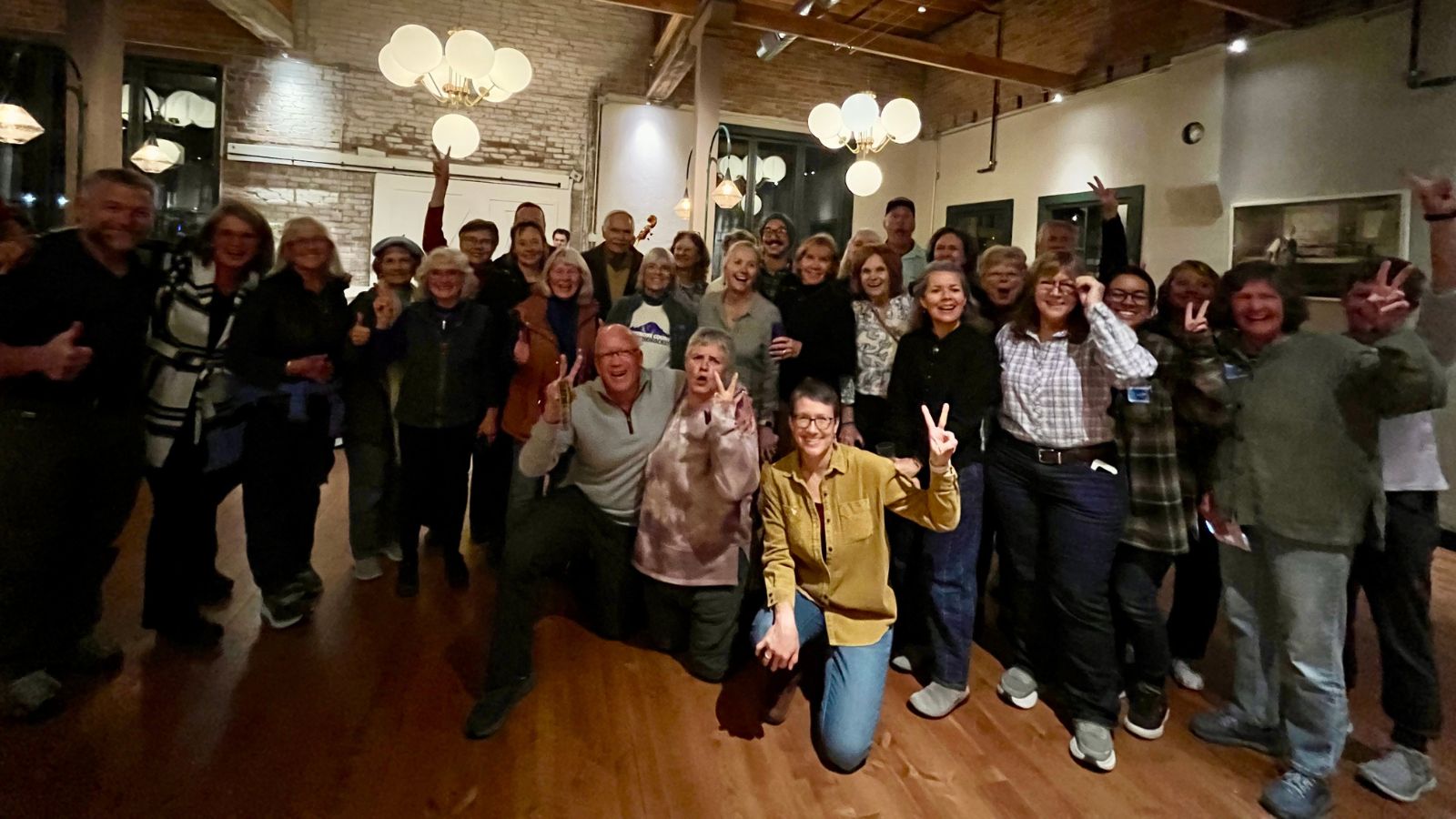
Election night came with more intense jitters than usual for most of the recall team. Based on the conversations they’d had on doorsteps and on the streets, team members knew he was unpopular. But in the current partisan environment, it was going to be a long shot to vote out a Republican commissioner, no matter how bad he was. The recall leaders, a tight-knit group by this point, hovered around a laptop in the cocktail bar of The Association, a collaborative business space, as the votes came in.
Early in the evening, it became clear that Mijares was out, and a new, independent county commissioner would be taking his place. After months of hard work, it was a moment of celebration that the whole team needed. The final vote, 8,439 to 7,773, was about as close to a landslide in conservative Montrose County as it gets.
“It really felt great to win,” said Gann, “but it was so unfortunate that [Mijares] got in there in the first place.” The recall left her feeling like she couldn’t let such a terrible candidate win again.
Now, she, along with Benziger and CORV, isn’t looking just to the next election cycle or even the one after that. They’re all committed to the long game and finding good candidates early in the process. “Let’s start priming the pump before the last minute,” Benziger said.
County staff and community members describe feeling like a storm cloud has lifted since the recall. County government is refocused on what the community needs, not the whims and moods of a single destructive person in power. According to McCorkle, people also seem more open and willing to talk to each other.
With neighbors throughout the county connecting over cups of coffee, petition clipboards, or sagging paper plates of tacos, the recall effort became about more than just removing one autocratic commissioner. It showed residents that the values that connect them far outweigh what divides them. And coming together around those shared values was proof that the people in Montrose County still had the power—and the responsibility—to govern themselves. It stirred a shared conviction that public office isn’t owned by a single person or political party. Democracy survives only when citizens are willing to defend it together.
At a moment when democratic institutions feel increasingly fragile, the recall effort tells a different political narrative—one rooted in community. “The people who knocked doors and gathered signatures in the summer heat were doing more than recalling a bad county commissioner,” said McDermott. “They were rebuilding the habits of civic engagement and democracy, one conversation at a time.”


Learn more:
Stepping Out of Isolation and Into Power
Grassroots Democracy Shines in the West with 2025’s Electoral Victories

Yes, I want to help WORC elevate Western voices and hold decision-makers accountable!