
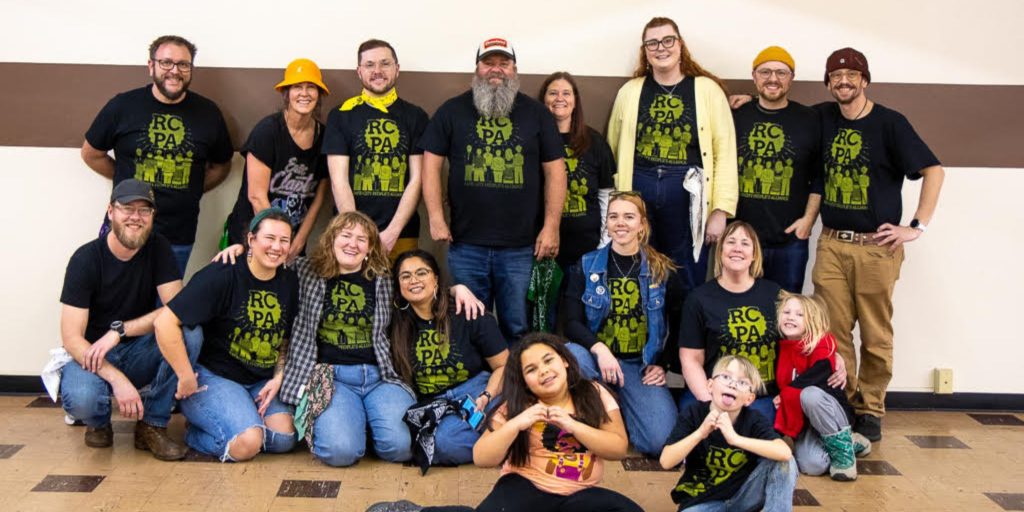
Rapid City People’s Alliance launches, taking on local special interests that are hindering the lives of the working class.
Above: RCPA member leaders at the organization’s launch event on January 31.
By Ted Brewer, WORC communications director
In late 2025, Fiona Farmer received a text message asking her to complete a survey to identify the struggles she and the people she knows in Rapid City, South Dakota, were experiencing. After Fiona completed the survey, Gabbi DeMarce, a community organizer with WORC member group Dakota Rural Action (DRA), got in touch with Fiona and invited her to a one-on-one conversation so Gabbi could learn more about what her life was like in Rapid City, what she cared most about, what challenges she faced, and what she thought city leaders could do to improve her life and those of others who are struggling.
Fiona spent a good portion of her childhood moving back and forth between farms in Wyoming and North Carolina, never spending enough time in either place to plant roots or make many friends. Her family, she said, was often impoverished and lived far from any towns. Ten years ago, they moved to Rapid City. Now a 26-year-old single mother of one, Fiona was feeling isolated and unsupported when she met with Gabbi. She suffered from depression and agoraphobia, making it difficult for her to find a job. She had been unemployed for two years.
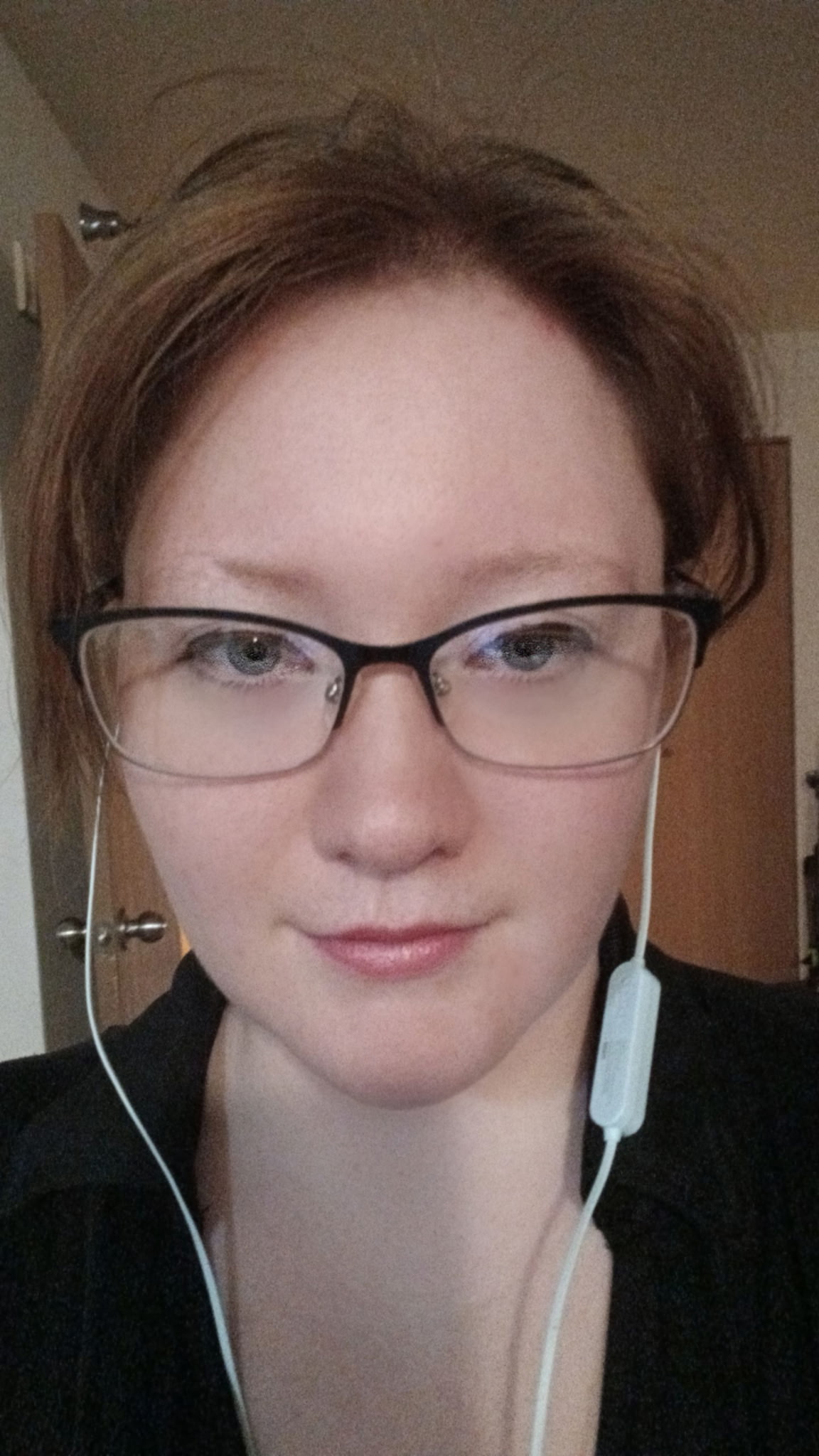
“I was just sitting around, feeling hopeless most of the time,” she says. “I had no one to reach out to, and I was just so alone. And Gabbi reached out and said, ‘I want to know your story. Your story can help us.’ And I was like, ‘excuse me?’”
To Fiona, the city seemed to be doing a good job of attracting tourists but a lousy job of taking care of its own residents, especially the growing number of people experiencing homelessness. She worried about the future her son could have in a city that she felt so disconnected from and didn’t offer people like her much support.
“I want to build roots here, especially for my child to experience those roots,” she said. “I also want him to have a place he can be proud to call home.”
Gabbi asked her what changes the city leadership could make to help people like her and others who were struggling.
“I want to see some changes that build people up,” she said.
Gabbi laid out a vision for change, what she called a “people’s agenda,” that did just that. She invited Fiona to help bring that vision to life. Fiona accepted.
“I had all this extra time and was tired of sitting and stressing,” Fiona now says. “I needed to do something with myself that feels productive and can help the community.”
Until Gabbi contacted her, Fiona wasn’t sure who sent her the survey she had filled out. She thought perhaps it came from someone on the city council who was trying to gain a better understanding of the challenges Rapid City residents were experiencing, so the council could address and maybe alleviate them. “I was a little disappointed to find out [the city council] wasn’t doing that kind of work,” she says.
“And I thought, ‘Oh well. I guess that’s just more incentive for us to do it.’”
By “us,” Fiona means DRA’s newest chapter, Rapid City People’s Alliance (RCPA), of which she is now a member leader. The chapter, itself a grassroots community organization, held its official launch on January 31, 2026.
Over the last several decades, researchers have well documented a steady decline in civic engagement, especially during and after COVID, resulting in what former Surgeon General Vivek Murthy called an “epidemic of loneliness and isolation.” A recent survey conducted by the National Civic League and ActiVote found that only 7% of Americans feel a strong sense of belonging where they live, and that two-thirds believe that “when decisions are made in their community, it’s ‘the usual suspects’ who show up and dominate the process.”
Keep up to date with grassroots organizing in the West with WORC’s newsletter.
The creation of RCPA illustrates the change that can occur in a community when working-class people who feel isolated and powerless begin to connect over shared struggles and values, form relationships, and together practice the principles of grassroots organizing. In doing so, RCPA’s founding members have discovered an individual and collective power that they didn’t know they had, a power of “unusual suspects” that could upend the status quo in Rapid City and bring about a government that prioritizes security and dignity for all of its residents, not just the city’s well-off.
Some nine months before the launch of RCPA, Gabbi had started work on a community assessment to identify Rapid City’s most pressing issues and needs, the power dynamics at play in the city, and the potential for everyday people to make positive change. She recruited a DRA member, Callie Stainbrook, an art instructor and mother, to help her. Like Gabbi, Callie grew up in Rapid City, moved away for school, and returned as an adult. For Callie, it was shortly before the pandemic began.
“When I was growing up here, I felt really connected to the community,” she says. “When I came back, I didn’t feel that way at all. It felt like people were really disconnected and didn’t want to have community.”
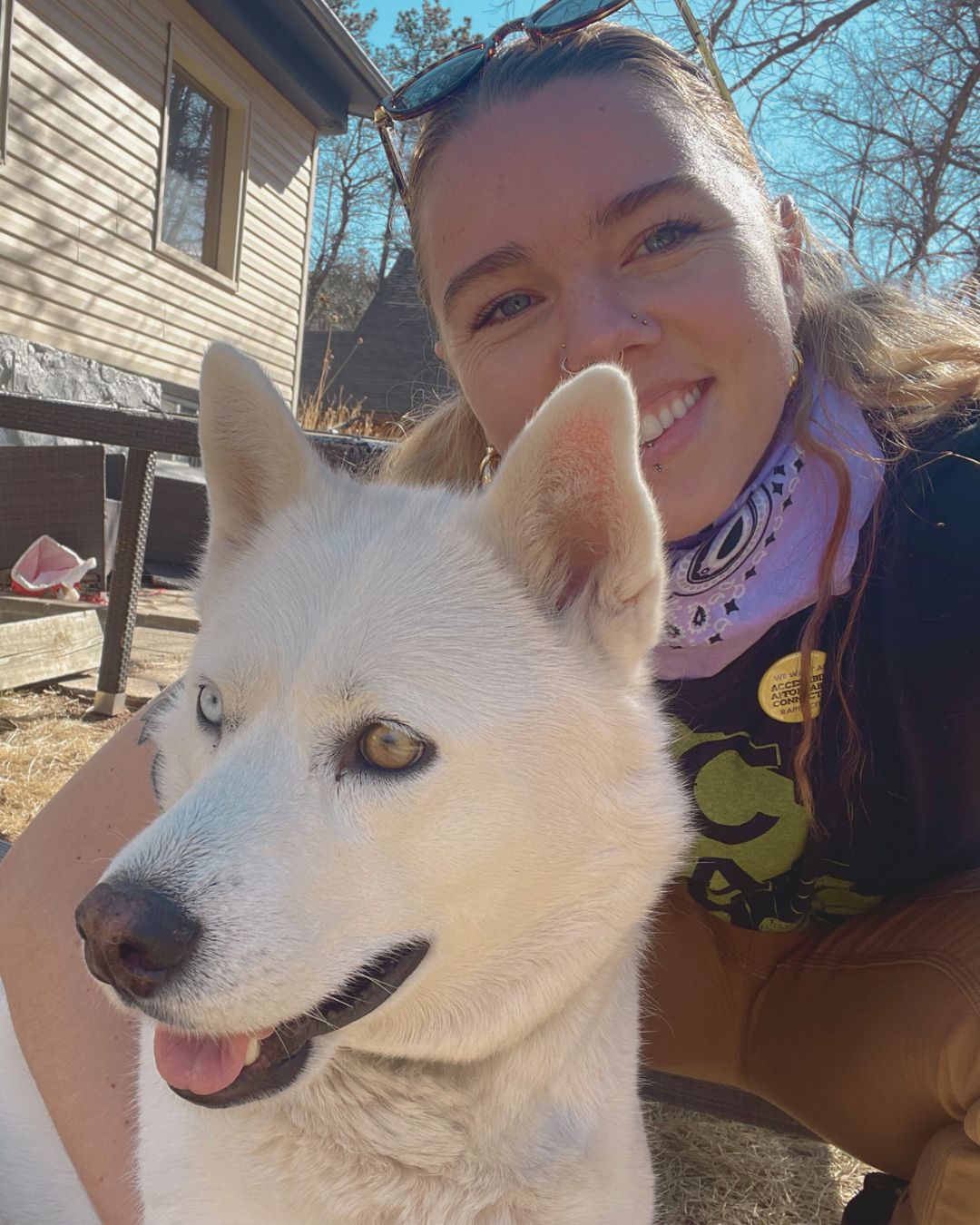
Callie joined DRA largely to rebuild the community she thought had been lost to COVID. In June 2025, she attended WORC’s Principles of Community Organizing training to learn more about how to be an effective organizer.
“What kind of mom would I be if I’m not building up a system and a society that is centered on community and care for each other?” she says.
As part of the community assessment, Gabbi and Callie launched a deep-listening campaign, engaging as many Rapid City residents as they could in one-on-one conversations. They asked residents what they care most about, what they struggle with, what keeps them up at night, and what their “self-interests” are—the term organizers use to describe what motivates people to become civically engaged. They would then invite them to become engaged through the community grassroots organization they were building.
“There was no end to the issues people were experiencing, and all of them were interconnected,” Gabbi says. The inaffordability and unavailability of housing came up often, as did low wages, insufficient public transportation, lack of affordable childcare, and a dearth of public services for people who are disabled, elderly, unhoused, and addicted. It struck Gabbi and Callie that many people were worried about the basic survival of their relatives and neighbors, if not their own survival. It seemed to Callie that people were feeling “nihilistic.”
By September, Gabbi had held more than 70 one-on-one conversations, Callie around 50. Of those, they recruited a solid team of around 15 people to serve as member leaders and help build the organization. Gabbi and Callie started offering new members training in grassroots organizing practices—how to understand self-interest, develop a public narrative that connects to public values and goals, build power, and create a shared community vision. Some of the more experienced member leaders took turns facilitating the training sessions.
“Every time we would do a training,” Gabbi says, “we would talk together about why we are doing this, to get on the same page. And every time it was: we’re doing this because we need to identify more people who have the self-interests to take responsibility and risks with us.”
To reach those people, late last year Gabbi, Callie, and 10 or so other member leaders developed a “community struggles survey” (which Fiona would eventually complete), asking respondents to identify from a list of issues the ones they struggled with. On the list were childcare, jobs/wages, mental health, transportation, and others. The survey then asked respondents to share a story that would help others understand those struggles.
The team then launched a texting campaign with a list of contacts Gabbi received from one of DRA’s partner organizations, United Today, Stronger Tomorrow, which had built the list years earlier when it conducted its own survey of South Dakotans, asking them how money from the 2021 American Rescue Plan Act should be spent in their communities. The text RCPA sent asked residents to complete the community struggles survey. Those who did received a call from someone on the team with an invitation to a one-on-one conversation.
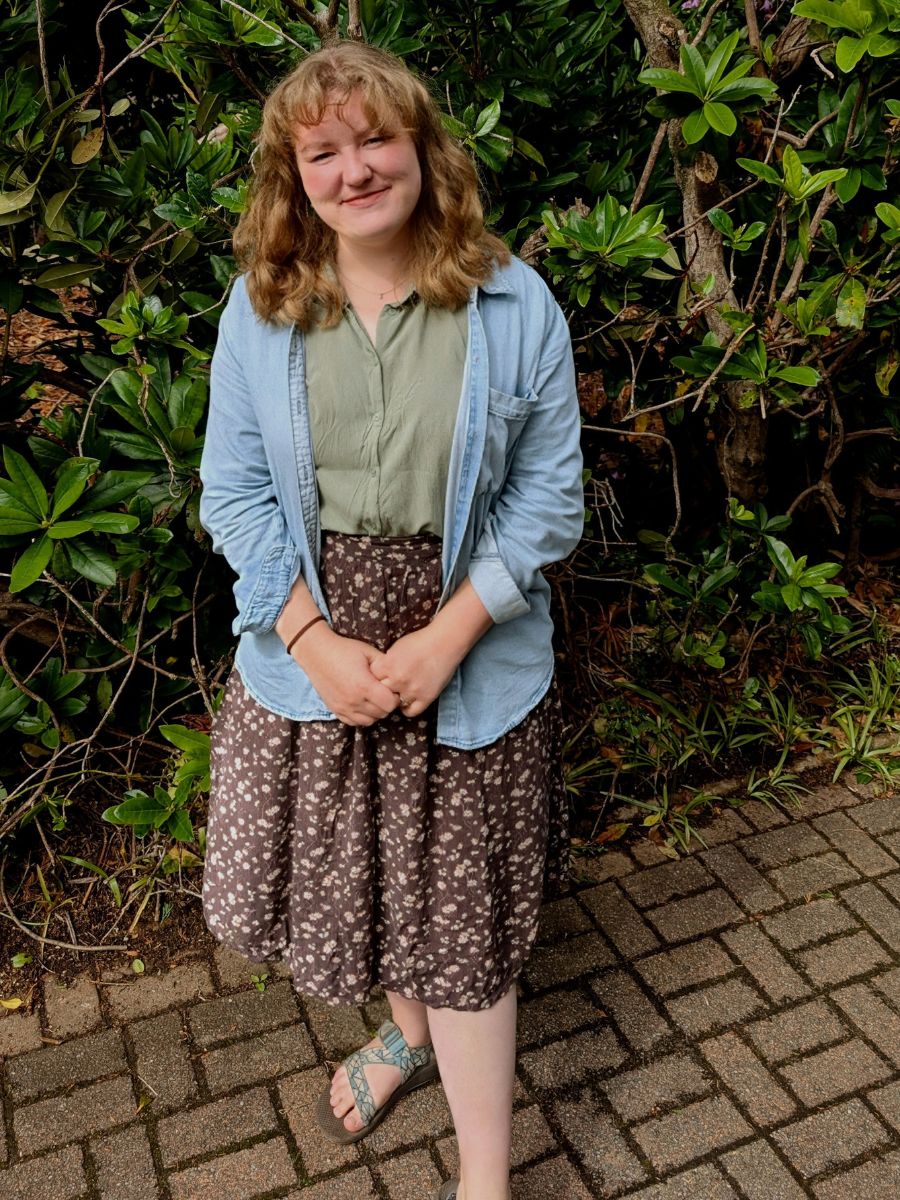
Having that list of people from United Today, Stronger Tomorrow proved to be invaluable. It connected the team to hundreds of residents it couldn’t have reached otherwise. On that list was Sanford Ader, a longtime Rapid City resident in his 40s and father of one. He works in construction with his own father, doing mostly remodeling. Gabbi met with him for a one-on-one after he filled out the survey.
“I’ve worked on rentals that landlords want us to do the bare minimum of work on, whatever they can scrape by with, and leave their tenants in just absolutely abhorrent conditions,” Sanford says. He’s also seen people from out of state buy up several properties in his neighborhood, close to Rapid City’s business district, and turn them into short-term vacation rentals or raise the rent on existing tenants, both of which have forced his neighbors out of their homes and sometimes out of the city entirely.
“I see people struggle on a day-to-day basis now, and it saddens me,” Sanford says. “That’s why I joined RCPA, to try to help, to try to make a difference.”
The cause of many of the struggles that Gabbi, Callie, Sanford, and other member leaders heard in their one-on-one conversations led directly to the Rapid City Council.
“I hear from community members on a regular basis who want to see change in the city government, but are hitting their heads up against the wall because there is this self-reinforcing system of power, filled with conflicts of interest, that exists in Rapid City and that is ultimately making it a place that people can’t afford anymore,” Gabbi says.
Early in her community assessment, Gabbi quickly realized the Rapid City Council was painfully removed from its working-class constituents, offering and advancing few, if any, policy initiatives that improved their lives. She wasn’t sure how to approach the problem until she attended an organizers training in Minneapolis. “At the training, [fellow organizers] agitated me to create a power mission that aligned with my own self-interests, that I would be willing to risk taking responsibility for and enroll people in with me,” she says. (In organizing speak, “agitate” means to stir up a person’s outrage and channel it into action.)
She remembers sitting in the training while the facilitator, an organizer from Minnesota, spoke about the importance of voter turnout and its impact on Minneapolis City Council elections. The facilitator showed a slide of the newly elected council body. Nine of the 13 council members were people of color, five of whom were women.
“I felt this rush of excitement and possibility come over me at the prospect of people making decisions about our lives that reflect the shared experiences, values, and diverse identities that our community consists of,” Gabbi says. “I left that training with a vision of each and every person in our community living with dignity, stability, support, connection, and safety. The mission required to achieve that starts with building a unified, empowered, and sustained organization like ours to help bring about a city government that effectively represents us.”
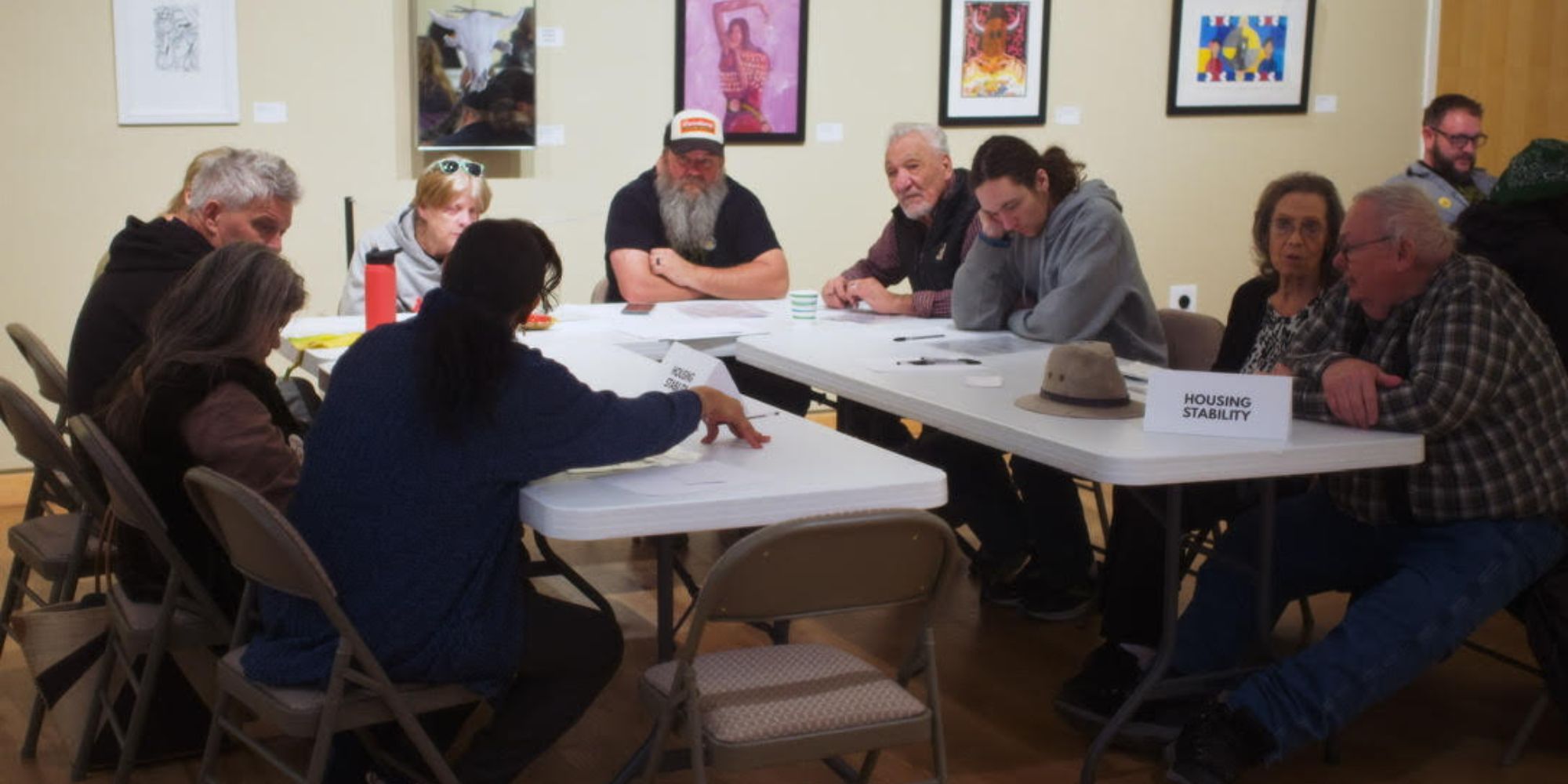
In her one-on-ones, Gabbi shared her vision and mission and invited prospective members to join her in taking responsibility for advancing them.
With that mission in mind, RCPA members later formed a research group to develop a power map showing who held the most sway over city council members. One group in particular stood out—Elevate Rapid City, formed in 2019 when the Rapid City Chamber of Commerce, the Economic Development Partnership, and the Economic Development Foundation all merged into a single, formidable entity representing business interests in the city, especially real estate development and tourism. Given the decisions the city council had made in recent years, it was clear that Elevate Rapid City exerted undue influence over council decisions, with real estate development and tourism taking precedence over policy issues that could improve the lives of its working-class residents.
Looking for answers on how this system of power emerged, Gabbi dug into the results of recent municipal elections and found that voter turnout was consistently and dismally low, hovering around 10-15% of eligible voters in some of Rapid City’s five wards. She saw an opportunity. By elevating the issues and policies that matter most to working-class and underrepresented people and by turning those same people out to vote, RCPA could pressure the city to address the issues.
“RCPA is here to tell disengaged voters that the way things are now is not how they have to be,” Gabbi says.
With that in mind, Gabbi and several member leaders drafted “The People’s Agenda.” It begins, “We, the working class and underrepresented people of Rapid City, believe in our vision for a better community: one of security and dignity for all. That vision requires responsibility, commitment, action, and accountability from the city’s leadership and its residents. The following policy criteria are required to achieve a Rapid City where all residents can live a dignified life.”
The policy criteria include:
- “Guiding housing toward affordability and availability, not luxury and scarcity.”
- “Incentivizing and advocating for living wage policies so that people can live dignified lives.”
- “Updating public transportation options to reflect city growth and be usable for citizens to get to work and access services.”
- “Investing in accessible community spaces and programming.”
- “Updating and improving a comprehensive plan to more proactively plan for city growth that benefits the community.”
- “Expanding critical resources for vulnerable residents, particularly those with disabilities.”
Each of these criteria comes with its own set of specific policy goals. (Click here to see them.)
A month after publicly launching the organization, RCPA members presented its People’s Agenda to the public at an expo at the city’s natural history museum, where community members engaged with the agenda for the first time. Attendees moved from table to table to discuss a particular issue category in the agenda, such as housing stability, economic dignity, community care, and others, allowing them to engage in conversation with fellow community members, identify common struggles, and recognize the stakes they share in making change in city government.
Well over a hundred Rapid City residents have already signed on to the People’s Agenda, and member leaders have already begun meeting with city council members to discuss it. Perhaps more importantly, RCPA already has 50 dues-paying members.
“What continues to feel good in this work,” Callie says, “is that people are really motivated to participate in our democracy and try to do something about it.”
For Gabbi, what matters most—more than the number of people RCPA has recruited, drawn to its events, or gotten to sign the People’s Agenda—are the relationships that she and the RCPA members have developed.
“Relationships are at the core of everything we do, because they are the foundation of our everyday livelihoods and our systems of support,” she says. “Knowing your fellow community members and them knowing you is what sustains us.”
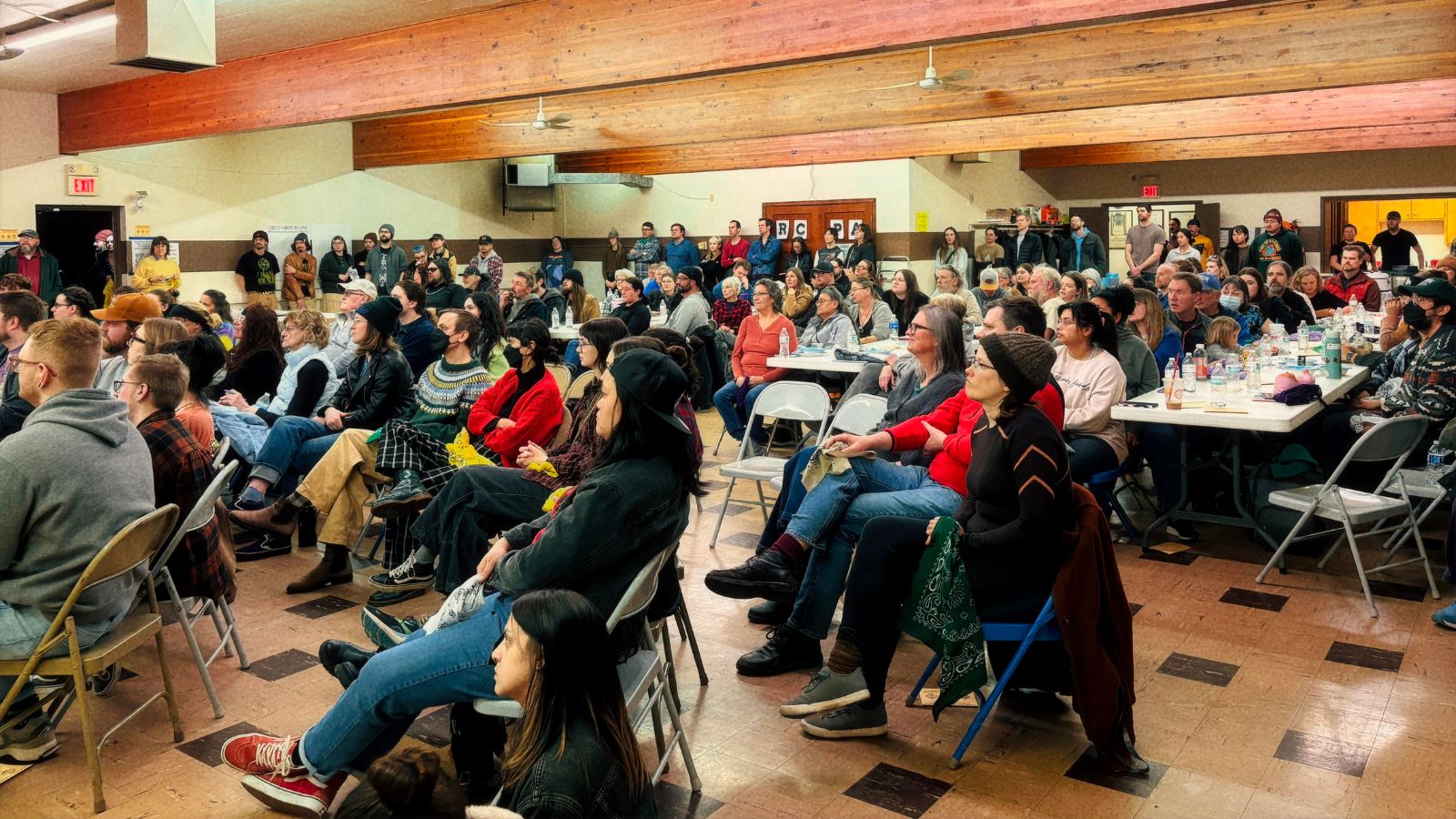
On January 31 of this year, some 250 people showed up at the International Brotherhood of Electrical Workers Labor Hall for the launch of RCPA. The event started with dinner. Six or seven people, many strangers to each other, sat together at each table, sharing a meal and getting to know one another and the lived experiences that had brought them to the event.
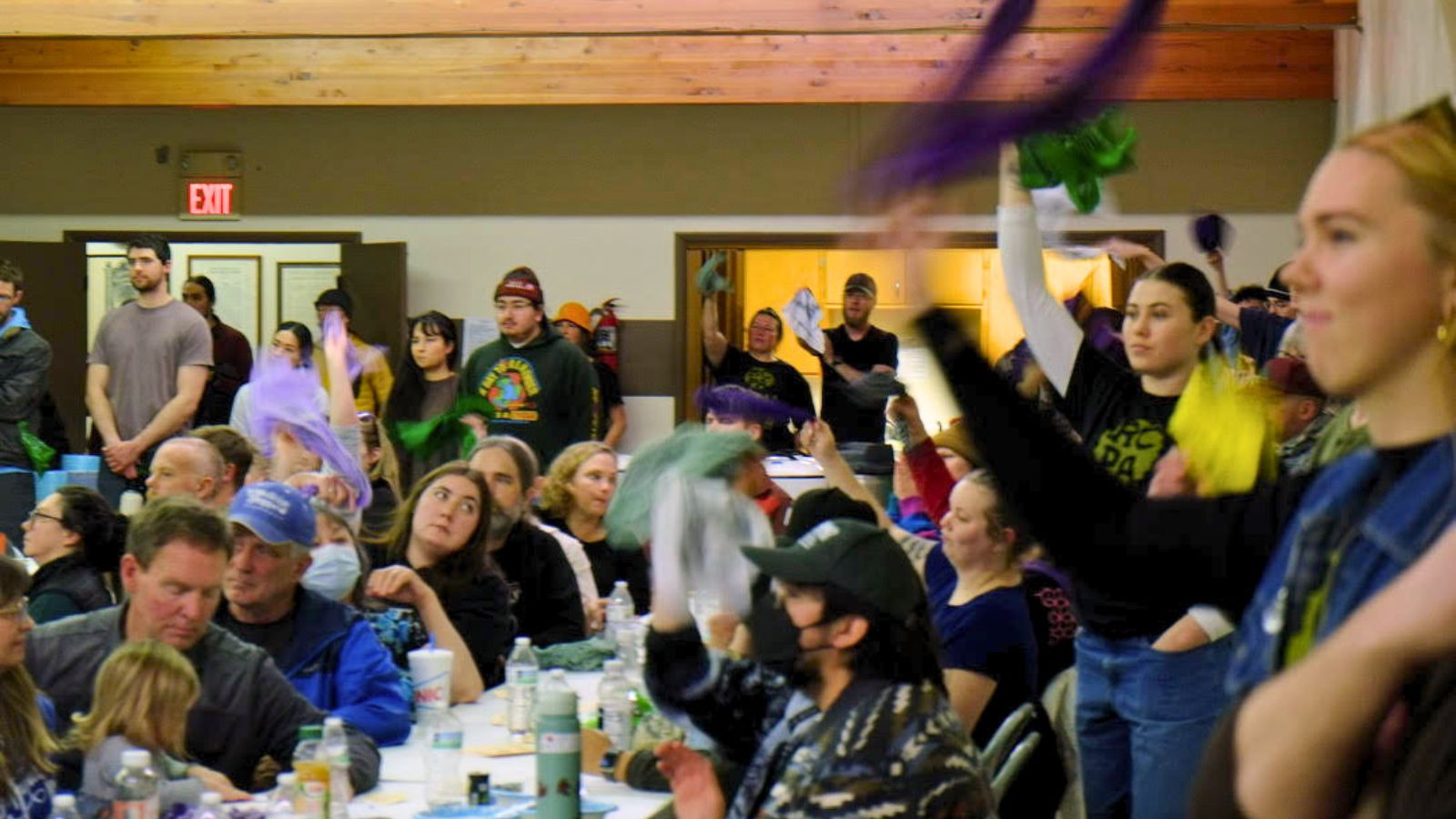
After the meal, six member leaders took to the rostrum one after the other to share their personal stories. Beforehand, everyone had been given a handkerchief to wave when they heard something the speakers said that resonated with or excited them.
“Callie had this vision for the event being super focused on our member leader stories—maybe for the first time in their lives, talk into a microphone about their struggles, what they’ve experienced, what they want to see in Rapid, and why they’re doing the work they’re doing,” Gabbi says.
One of the speakers was Sanford, who confesses that he is “completely petrified of public speaking.” He overcame his fear that night to relate his own struggles and the struggles he sees people in Rapid City experiencing. Soon into Sanford’s remarks, audience members were waving their handkerchiefs.
“All of a sudden, I wasn’t talking to strangers. I was just talking to a room full of neighbors,” he says.
Before the event started, Fiona had sat in her car outside the Labor Hall experiencing so much anxiety that she wasn’t sure she could open the door. She finally mustered the courage, opened her car, and joined her fellow RCPA members inside the hall as they prepared for the event. Since that day, she’s landed a job with an office cleaning service and enjoys it. She now credits RCPA with having brought her out of her depression.
“The emotional and mental shift that this work is having in people’s lives, to know what it means to walk in the world with power and hope in your life…. It makes the world look different,” Gabbi says. “To me, that’s the point of organizing—to see people step into their power together and support them in doing that is the most fulfilling thing to me.”


Learn more:
Winning a David and Goliath battle
Dakota Rural Action Members Stand Up for Clean Water in the Black Hills and Win

Yes, I want to help WORC elevate Western voices and hold decision-makers accountable!