
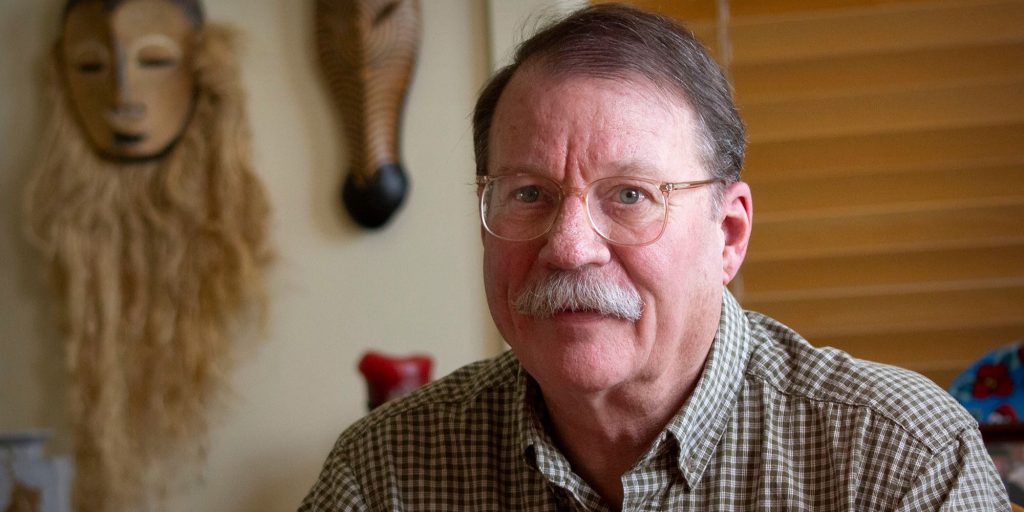
After five decades of shaping grassroots organizing in the West and High Plains, Pat Sweeney is stepping away from WORC but continuing the fight for democracy.
Pat Sweeney, WORC’s founder and long-time director, casts a long shadow in the West’s community organizing and political organizing space. After helping to start the Northern Plains Resource Council in 1972 and building the organization over the decade, Pat became WORC’s first director in 1983. He’s since gone on to shape community and political organizing in the West and Midwest by growing the WORC network into an organization with the grassroots power to win big victories on coal, petroleum, and agriculture. Pat also worked with Tribal communities to start Indigenous-led organizations in two states. This January, after five decades of building power through grassroots organizing, Pat Sweeney stepped away from his role as senior advisor at WORC. Below is a short interview with Pat, reflecting on his time at the network, why community organizing is still the best way to build power, and what he plans to do next.
I want to go all the way back to 1972. There were so many different types of nonprofits, including advocacy organizations. What made you choose to focus on grassroots?
The way Northern Plains got started was very grassroots from the beginning. Members came together in the Bull Mountains, down in Birney, Sarpy Creek, and Colstrip, forming their own local organizations, talking neighbor to neighbor in their communities. That’s how Northern Plains really got started. And that was how the affiliate structure was born. There were neighbors coming together to figure out how to address the onslaught of coal. I think in some respects, even more than grassroots, it’s community organizing. In other words, meeting people where they are is a natural part of community organizing and organizing at the local level. The way to really build power is from the community on up. There isn’t really an effective top-down strategy in my mind, especially long-term. The power people have is standing up and speaking their voices and telling their genuine stories, which are so effective when it comes to persuading people about solving problems. I think it’s the grassroots or community-based work that really helps us address things that are going to help people, locally, concrete solutions, whether it’s a problem with polluted water, toxic air quality, or dealing with another complex issue, such as more affordable housing.
So you’ve had a long history with WORC and Northern Plains. Is there one memory that really sticks out as a moving moment?
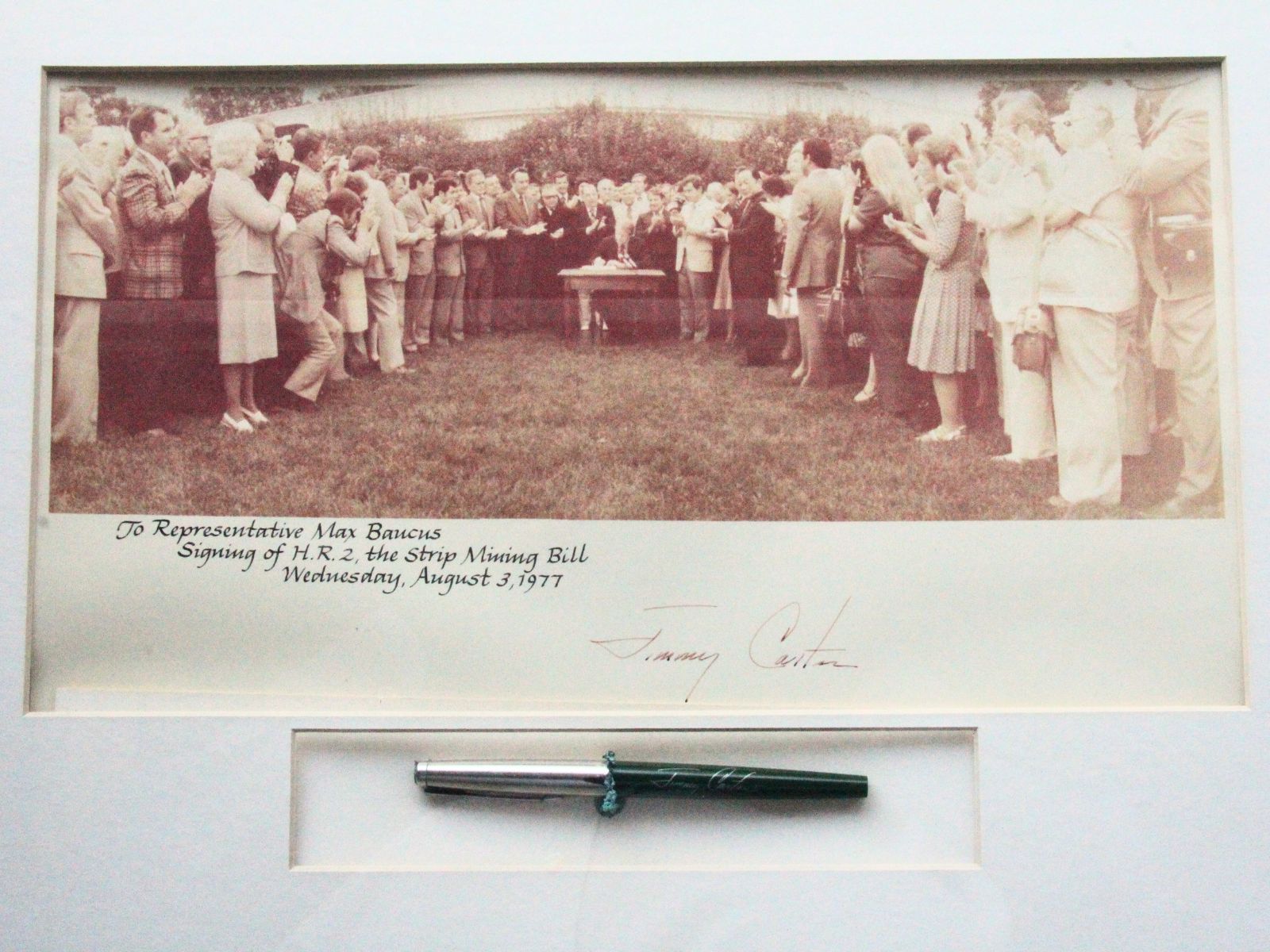
Lots of them actually come to my mind. There are some memorable milestones when I think back, like when we were invited to the White House in August of 1977 to see President Jimmy Carter sign the Surface Mining Control and Reclamation Act (SMCRA). In some respects, that was a huge moment, because there were 200 citizens who actually attended that Rose Garden ceremony. You had all the congresspeople and senators who’d signed on behind the President. But in this case, President Carter really recognized that this was a citizen’s law. People from Appalachia, the Mid-West to the West and Native Americans really pushed to make it happen. And to have leaders from Circle, Montana and members from Birney, the Bull Mountains, Sarpy Creek, Colstrip and our members from Dakota Resource Council in North Dakota and Powder River Basin Resource Council in Wyoming who were also extremely involved, standing there was a moving moment that truly recognized the power of grassroots organizing.
Keep up to date with grassroots organizing in the West with WORC’s newsletter.
There were so many other times that were just as simple as sitting down with Helen Waller (Northern Plains member leader) and working over, you know, her presentation or meeting strategy, and just realizing how important it was to build that relationship with a leader and all our different leaders. I just use Helen as an example. Mabel Dobbs (Idaho Organization of Resource Councils and Oregon Rural Action member leader) from Weiser, Idaho, is another example of working with a leader one-on-one to then witness her stand up and tell her story. I often quote Helen when she was asked when she was entering a meeting if she was ready and her response was, ‘its not am I ready, it’s whether they are ready for us!’ I could list hundreds of examples of those kinds of events that you look back on, and you just realize how unique and important those particular 30 minutes or an hour were that made a difference in terms of leaders stepping into their own power.
What are you most proud of?
The ability to work cross-culturally is probably one of the things that I’m most proud of. Helping build Western Native Voice and North Dakota Native Vote, and helping WORC really expand in terms of a multiracial, multicultural organization, gives me hope, frankly. And it’s hard. I know it’s hard. We’ve certainly made one step forward and oftentimes two steps back, but it’s where we have to go, and we’ve committed to doing it. I think it’s a strength of our organization and our work.
I’m very proud of the building, Home on the Range. Teresa [Erickson] (Pat’s wife and long-time Northern Plains director) and I found that building. The vision was to help leaders with a home for WORC and Northern Plains, which then became such a piece of sustainability, from recycling everything to building a green building and getting LEED certification. We walked the talk.
“And here we are more than 50 years of leadership and action still building power and winning issues even now through the toughest of times.”
And I’m proud that we built something that’s lasted, that’s permanent. Several of these organizations are now over 50 years old. That’s a testament to how we built them — the culture of the organization and the ability of new leaders to come in and new staff to take over all these kinds of things. That’s a pretty amazing legacy, when you think about how many other nonprofit organizations disbanded or failed and haven’t been able to build permanent power building organizations. And here we are more than 50 years of leadership and action still building power and winning issues even now through the toughest of times.
If you could go back, what might you do differently?
One of the accomplishments I didn’t mention was our work helping leaders get elected to office. I wish I had done more to get that institutionalized in our work. Obviously, we’ve done a lot, almost from the beginning with Dick Colberg (Northern Plains member leader) being elected in 1972 all the way up to getting a new mayor and three new council members elected in Billings last fall. We’ve done a lot to get leaders and supporters elected to public office, but I think not as much as we could have. In the end, what’s important is who’s at the table when the decisions are being made. As they say, if you are not at the table you are probably on the menu. So I think trying to figure out how to institutionalize that throughout the network would have been an even greater emphasis.
I also wish I could have figured out how to sustain High Plains News. WORC was on the cutting edge in building credible regional public radio news as mainstream news began to fade. We had high quality producers and really top notch production quality and stories. I was very frustrated when we had to close it down for lack of sustainable funding. We should have gone into the business of owning our own radio stations.
Community organizing doesn’t always result in short-term wins. How did you get through the low points?
Wally McRae and I used to talk about the difference in organizing between sprinters and long-distance runners. In this struggle, we all need to be sprinters at times, because there’s some very hot issue or campaign that we’re working intensely on. But in the long run, you’ve got to basically be a long-distance runner. You have to be able to look at the long term and how you’re going to make change over time, and that sometimes requires taking risks and experiencing stops and starts. The important thing is to have a longer term vision about how you’re building power, how you’re building the organizations, how you’re increasing leadership and the sophistication of your campaigns.
I think one of the things that gets you through the tougher times is the resiliency and dedication of members who live in our communities. Organizers can go off and do something else if the going gets tough or they get discouraged. In terms of life, members and people in the community, they can’t go anywhere. In most cases they don’t have the option. I think what gets you through is the staying power of our leaders and members who are not giving up, no matter what the odds are. To quote Helen Waller again when the farm foreclosure crisis of the mid-1980s exploded, ”I didn’t save my farm from the strip miners to have it taken by the bankers.” Helen and WORC then went out and helped form the National Family Farm Coalition. Helen was its first national chair. That kind of grassroots grit is what gets me through tough times.
Describe a time when you saw people power win.
There’s just so many examples of the power of people standing up and speaking truth to power. Years ago we had the first example of sod busting up in Petroleum County. Our leaders at the time stood up to Graytech, and said, No More Sod Busting. The blowing and drifting land filled the fence lines to the top rail with soil. It was just such a devastating impact from the breaking up of these large tracts of grassland. And, here’s this little conservation district with farmers who basically stood up and said, “No, we’re not going to do this.” And they won a vote in very rural Petroleum County, of all places. And their action created a movement to stop sod busting.
“In the end, what’s important is who’s at the table when the decisions are being made. As they say, if you are not at the table you are probably on the menu.”
I also think about the Billings air quality campaign and the kind of work over time that the Billings members did to clean up the air quality once rated next to Pittsburg the worst in the country and against the three major refineries and coal fired powerplant. These were the powers that be in this town in terms of economic drivers. It took a concerted effort, but persistence and organizing worked in a major way to build bipartisan community support. John Bollinger, a Republican state legislator here in Billings, was one of our big champions. There’s just so many cases where people came together to build that kind of power base to win. I mean, I could just go on and on and on with courageous leaders running outstanding campaigns. I’m a big fan of documenting our history. Teresa and Northern Plains have a model history project that has documented the many struggles in Montana through video, story telling and major books documenting the history of Northern Plains and the Good Neighbor Agreement with the Stillwater Mine. These are such important efforts that need to be ongoing as we write new history every day.
What’s giving you hope these days?
You know, it’s hard to find it some days. Certainly, the resistance people are showing out on the streets these days, especially in Minneapolis and other places.
Winning local elections last November gives me hope. I mean, people still care about having a strong, local, accountable government and having people with common sense, empathy, and community wellbeing lead their communities. There’s still a chance for people to step up who are genuinely concerned and want to govern in a civil, respectful, common-sense way. It didn’t just happen in Billings. Kalispell got a new mayor who’s a really good leader. Polson, Fort Benton, Helena, Missoula, I mean, across the board. At the community level, especially in the nonpartisan races, there’s a lot of really talented people stepping into governance in Montana, who all potentially have a good future for our state in terms of higher office. They’re younger and energetic and smart and really community-minded. And I frankly see this trend across the country.
What also gives me hope and strength is having a partnership with Teresa which I think is an important piece of both our success over time, but also the ability to put things in perspective. And then also help balance out the craziness and intensity of work with the ability to go out and do other things with family like go fishing.
What are your future plans?
I can’t remember Mark Twain’s exact quote, “the report of my death has been greatly exaggerated.” To some degree, that’s how I feel about the announcement of my retirement. I mean, I continue to organize. Once an organizer always an organizer. I have a contract with Western Native Voice. In terms of my volunteer time, I’m actually doing a lot with Big Sky 55+. It’s a great organization I helped found seven years ago. People are living longer, and have experience, often wisdom, resources and time. We call it senior superpower. Senior superpower is a real thing. Seniors are the majority of Montanans now. People don’t realize Montana and Oregon are the oldest states West of the Mississippi. Montanans 55+ comprise well over half the voting population in Montana. And so I think about how important it is to build a unique and powerful organization of elders/older people who can use their superpowers to pursue really positive change. Seniors care about affordability, good public schools, fair property taxes, medical insurance costs, saving Social Security and Medicare and so many important programs.
“We’ve spent our whole lives, you know, fighting injustice and organizing to build people power. I mean, it’s just too hard to walk away from any of our current struggles especially at a time of democratic regression and the rise of authoritarianism.”
We’ve spent our whole lives, you know, fighting injustice and organizing to build people power. I mean, it’s just too hard to walk away from any of our current struggles especially at a time of democratic regression and the rise of authoritarianism. There’s a niche for us standing up and speaking out. My theory of organizing is that good organizers know how to lead from behind. Know the different roles we as organizers assume as opposed to leaders. “A good organizer is a leader who does not lead but gets behind the people and pushes.” That’s an axiom of organizing from Fred Ross, Sr., a mentor organizer. It is important to make sure our members are out front, telling their stories and making decisions. So, it’s a transition stepping into a little more of a leadership role with a slight push.


Learn more:
Organizing for Transformation in Nebraska
Lifting the Voices of Farmworkers through Community Organizing
Yes, I want to help WORC elevate Western voices and hold decision-makers accountable!