
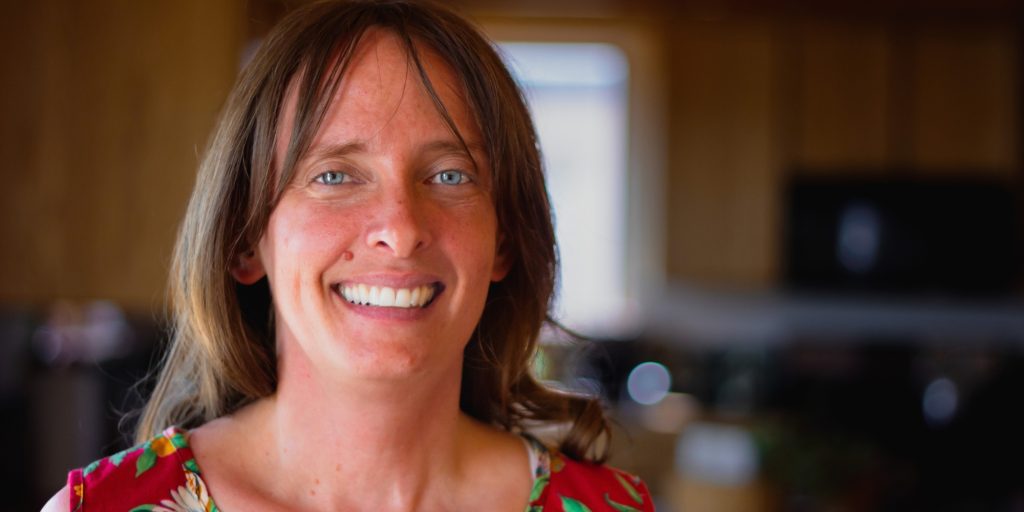
How a member leader built rural, conservative support for a solar-friendly land-use code in Montrose County, Colorado
By Eric Warren, WORC communications manager
In November 2025, Montrose County residents poured into the county Fairgrounds Banquet Hall, greeting one another and chatting in groups. This was the final listening session in a series to gather feedback on two possible land-use codes regulating renewable energy. Compared with the recent spate of contentious, almost combative county commission meetings, this one seemed downright festive. The more people filed in, the more relieved Jennifer Jones felt.
Jones, a social worker who serves unhoused veterans, reviewed the talking points she had long since memorized and would deliver to the county commissioners. It was a make-or-break moment for solar energy in the county. But with nearly all of the seats filled, things were playing out as she’d hoped. “Our people showed up; our people are going to speak out,” Jones recalled. “I felt very strong.”
As a member leader of Western Colorado Alliance, one of WORC’s member groups, Jones led the Alliance’s campaign to persuade the Montrose County Planning Commission and county commissioners to adopt a land-use code (called Alternative 1) that allows for and governs utility-scale solar development in this western Colorado county. Passage of the code would lift the county’s moratorium on solar development, which had been in place for nearly three years. To build a base of supporters for Alternative 1, she spent time with residents in the county’s most conservative and rural communities, listening to their concerns and making sure their voices helped shape the code. This engagement resulted in the large crowd now filling the banquet hall.
Before the session began, Jones and her group of solar supporters heard rumors that the two anti-solar commissioners, Scott Mijares and Sean Pond, might bring a vote on a different land-use code, one they’d created themselves with no public input, called Alternative 2—a plan with restrictions so onerous that it would effectively ban utility solar projects in the county. As the room filled with people she’d spoken to over the last couple of years, she felt the community coming together and becoming a force the commissioners would find difficult, if not impossible, to steamroll.
Commission Chair Mijares called the meeting to order. He sat at a long, linen-covered table between Commissioners Pond and Sue Hansen, a pragmatist who’d shown she was open to solar development so long as the county could find the right balance between safeguarding the community and bringing in business investment.
“The county commissioners that were opposed to solar, they really were not going to pass the land use code that we had developed,” Jones said. She hoped that if public pressure could stop Mijares and Pond from passing their own code, it would give solar advocates enough time for other political moves to play out, including a recall of Mijares that was before the voters.
As person after person, including Jones, offered their three minutes of testimony, it quickly became clear that support for responsible solar development was widespread and crossed demographic, regional, and political lines. Olathe farmer John Harold, a well-known and well-regarded voice in western Colorado, joined other farmers and ranchers in objecting to county commissioners taking away their choice on how to manage their property. If solar could subsidize his farming operation, he at least wanted the option to pursue it. In a conservative county with deep agricultural roots, this argument hit home.
Keep up to date with grassroots organizing in the West with WORC’s newsletter.
Mijares and Pond looked increasingly uncomfortable as the meeting wore on. While a handful of people spoke up in support of their Alternative 2 code, dozens more came out against it and in support of Alternative 1. While the two commissioners may have been surprised by their constituents’ anger over their heavy-handed anti-solar policy and tactics, Jones wasn’t. She’d spent a lot of time talking one-on-one with residents, listening to their concerns about solar development, and engaging them on the issue.
Surprised by the level of opposition to their own land-use code, Mijares and Pond postponed voting on the two land-use code options. A de facto moratorium remained in place, but that meeting marked a turning point. It showed that, at the community level, solar development wasn’t partisan; it was practical. Folks in Western Colorado have some of the highest energy costs in the state. And when community members collaborate on how to regulate it, solar proved overwhelmingly popular. Intentional, concerted community organizing made that happen.
“We organized the ranks for that final forum,” said Tony Hoag, an Alliance member and leader with Citizens’ Climate Lobby, a group that coordinated with the Alliance on Alternative 1. For Hoag, the years of organizing across geographic and ideological divisions had paid off. “We had our people.”
Just off Highway 50 near the town of Olathe sit 65 acres of solar panels on land where the Louisiana Pacific fiberboard plant once operated. The panels are arranged haphazardly, pointing in all directions, and not all toward the sun. A “for sale” sign stands along the highway. The installation was part of a Bitcoin data center. A developer bought the fiberboard plant, installed acres of solar panels, and then went out of business.
“It was a disaster,” Jones says of the Bitcoin operation. “It was this huge sprawl of solar panels that everybody could see from the highway, and none of the energy was being used by the local community.”
Because Montrose County had no land-use code to guide developers or protect the community, the project included no visual impact mitigation or community benefits package. Then, just north of Montrose County, Delta County sited a 383-acre solar facility. Delta County also had no land-use code, leaving the county at the developers’ mercy. Garnet Mesa Solar Project ended up benefiting Delta residents and utility ratepayers in a way the Bitcoin installation didn’t, but it also inspired both Montrose and Delta Counties to impose moratoriums to stop further solar development until they could create land-use codes.
Jones has lived in Montrose County for over two decades and has seen climate change bring hotter, drier summers and extreme weather events to Colorado’s Western Slope. This part of Colorado has warmed 2.1 degrees Celsius in the last few decades, outpacing the rest of the state, the U.S., and even most of the world. That kind of warming can have dire consequences for an already hot and arid landscape. “I think that renewable energy is pivotal for addressing our grand problems, climate change, a livable Earth, and a livable Southwest,” Jones said. “It’s a primary problem worth tackling. It affects everything.”
In 2022, Jones joined the Alliance’s campaign in Delta County to convince its commission to approve Garnet Mesa’s conditional use permit. Initially, the Garnet Mesa project faced intense opposition, and the commission voted against it. This opposition stemmed not only from concerns about how the project would change the landscape but also from ideological resistance tied to the county’s deep agricultural and coal mining roots.
In response to the commission vote, the Alliance mobilized local residents to urge county commissioners to support the project. Their efforts also included direct engagement with the local electric co-op, Delta-Montrose Energy Association (DMEA), to advocate for the project. After months of persistence and organizing, the Alliance convinced Delta County commissioners to overturn the initial vote and grant a conditional-use permit for the Garnet Mesa Solar Project.
When talking to people about solar energy, Jones highlights the economic benefits for counties that host renewable energy generation. The energy produced often stays close to home, reducing electric costs for surrounding communities. Western Colorado residents have seen their energy bills inflate, with one exception. DMEA customers have mostly been insulated from rising costs, partly because of the Garnet Mesa Solar Project.
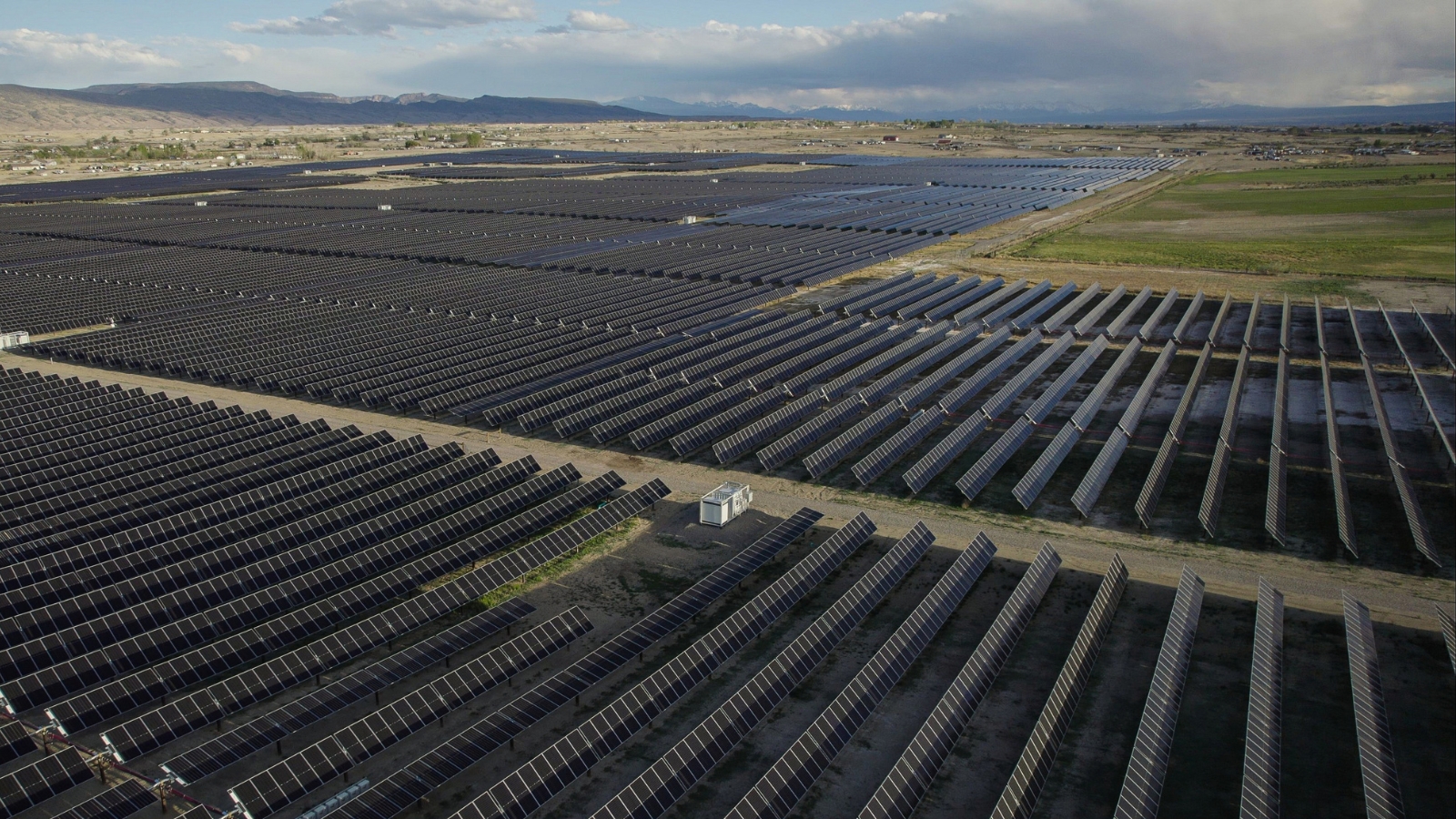
The Garnet Mesa project went fully online in 2025. The 80-megawatt array is Colorado’s largest agrivoltaic installation. Its solar panels cool the soil, creating ideal conditions to grow forage for 600 grazing sheep. The plants growing beneath then cool the panels, boosting electricity production by up to 10%.
“These are powerful tools for us to meet our climate goals in the Uncompahgre Valley through our electric cooperative,” Hoag said.
“Garnet Mesa is a big deal,” Jones said. “This allows DMEA to have 20% local energy now, and the price is locked in for the life of DMEA’s power purchase agreement, which helps stabilize energy prices for customers.” Over the next 15 years, the project will contribute an estimated $8 million in property tax revenue, bolstering Delta County’s economic growth.
A wholesale block on utility-scale solar would mean that Montrose County would lose out on this kind of revenue and growth.
After Montrose County voted for a moratorium in 2023, a County Planning Commission made up of residents took on creating a land-use code to manage solar projects. In early 2024, the commission put out a disappointing draft.
“It wasn’t great,” says Tyler McDermott, an organizer with the Alliance. “So our members started going to the planning committee meetings and workshopping it with them.” Jones was one of the members who helped educate the commission and incorporate good solar policy. They looked at other Colorado counties’ regulations as models and learned as much as they could from other community stakeholders and solar industry technical experts.
“You want to protect the community from what may be less than ideal from a solar installation,” Jones says. “And you also want to know what benefits that solar project is going to bring to the community, because they are using our land for their particular development. So what are solar developers going to bring to our community that’s going to benefit us in exchange for our land?”
“Garnet Mesa is a big deal. This allows DMEA to have 20% local energy now, and the price is locked in for the life of DMEA’s power purchase agreement, which helps stabilize energy prices for customers.”
-Jennifer Jones
By the end of 2024, the committee had something they believed adequately protected the residents, yet allowed solar development. The election had just taken place, and the two lame-duck county commissioners felt uncomfortable voting for such consequential rules. They chose to hold off on the proposed land-use plan until the next commission could be seated.
The next commission included Scott Mijares, who ran unopposed in District 1, and Rick Dunlap, a pragmatic former sheriff who won the county’s western District 3. The community-created land-use code again looked like it might pass two-to-one. A few weeks into his tenure, however, Commissioner Dunlap died unexpectedly. The Republican central committee installed Pond to fill the seat. The new commission, made up of two anti-solar commissioners, jeopardized all the work the committee had done to create a balanced land-use code.
“[Pond and Mijares] were not interested in having solar as part of the local energy grid mix,” said Jones. “They pretty well stalled the land use code that we had developed from being approved or voted on. They just kept extending the moratorium.”
While the moratorium dragged on, Mijares and Pond drafted their land-use plan, Alternative 2, behind closed doors. Since they only needed their two votes to push it through the county commission, they could ignore the community-developed Alternative 1. All they needed was a nominal show of support for their plan from their anti-solar allies, and they could claim they were responding to the will of the residents.
In early summer 2025, Jones and Hoag caught wind that Commissioner Pond was holding a town hall on solar in Nucla, Colorado. They drove two hours to the remote community on the county’s west side, known as the West End. Pond spoke, misrepresenting Alternative 1 to a packed house of mostly anti-solar constituents. “He was basically poisoning the well,” Jones remembers. Pond warned that if Montrose’s population center got its way, it would force solar down their throats, blanket the West End with solar panels, and imperil the tourism economy the area depends on.
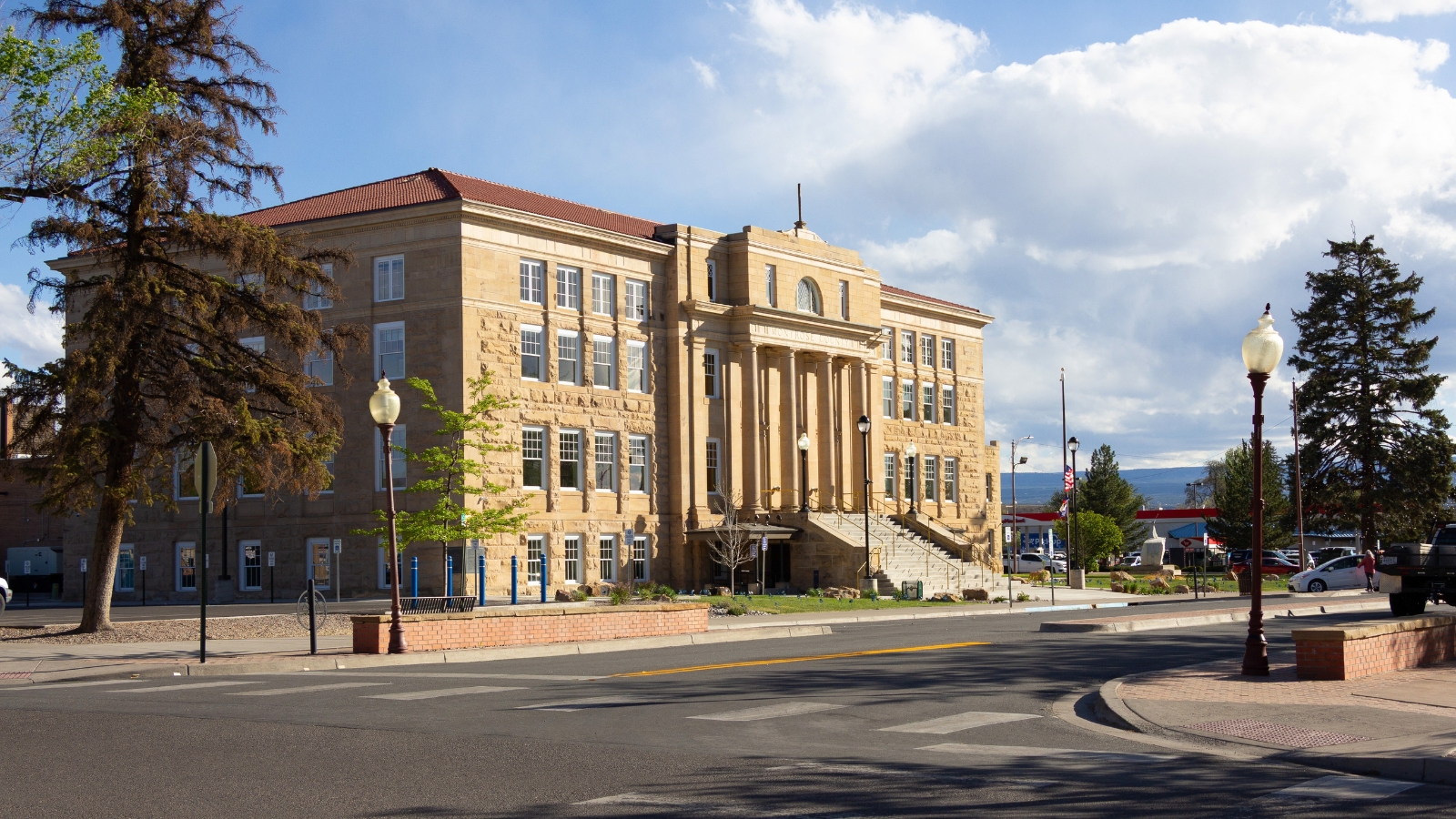
Montrose County’s West End is a set of small, remote communities with a population of around 1,000, about 1/20th the county’s total population. Its small population and remote location mean decision-makers in Montrose often overlook it. Pond exploited the community’s sense of being unimportant to drum up support for his and Mijares’ Alternative 2 land use plan.
“That’s when we realized, okay, we got to get some buy-in from the West End and make sure they have their voices heard,” Jones said. They needed to talk to people in these communities face to face.
Jones had met with commissioners and spoken at commission meetings, but she’d never knocked doors. Her years as an Alliance leader and the Principles of Community Organizing training she took from WORC taught her that grassroots organizing starts with meeting people where they are and building relationships through authentic conversations.
“It was kind of scary to go out there,” Hoag says. “Jennifer didn’t need her hand held or anything. She just went off on her own, knocked on people’s doors, and had conversations with them. This is what you do in public work when you’re trying to get people involved.”
Through those doorstep conversations and public meetings, Jones saw her assumptions challenged. They asked whether the land-use code protected viewsheds critical to tourism. Did the solar facilities have rigorous decommissioning plans? What kind of securities were in place to prevent developers from abandoning the facilities? Speaking to people one-on-one helped Jones see things from their perspective.
“That’s what made it great,” Jones said. “Actually finding common ground in difference was far more enriching than finding affinity with like-minded people. Their critique and pushback helped us grow and come together more as a community around energy.”
“Actually finding common ground in difference was far more enriching than finding affinity with like-minded people. Their critique and pushback helped us grow and come together more as a community around energy.”
-Jennifer Jones
Those conversations also alerted West End residents that Pond and Mijares had made their own code behind closed doors. When the community realized their leaders hadn’t even come to them for input, they became much more interested in participating in the process. The concerns that had turned West End residents against solar became opportunities to create a better land-use code. “When they actually came and joined us and joined our community and participated as richly and equally with us as the other districts, that was huge,” Jones said. “Realizing that we could all come together as a community and pass a land use code that pretty much had the entire county’s fingerprints on it was big.”
In the end, Alternative 1 incorporated many of the protections that West End residents wanted, including 250-foot setbacks from off-site dwellings and 500-foot setbacks from substations. It also included noise and viewshed impact mitigation measures and robust decommissioning plans with bonding requirements to ensure the facilities are dismantled and the land reclaimed when power generation ends.
West End residents also contributed the winning argument: private property rights. While residents may not have wanted their part of the county blanketed with solar panels, they also didn’t want someone in Montrose telling them what they could or couldn’t do with their own land.
“Private property rights are a bedrock, foundational conservative value,” Jones said. When speakers pushed back against Pond and Mijares’ land-use code at the final listening session, the commissioners had to admit Alternative 2 limited individual private property rights. “Montrose County is conservative, so it’s appropriate that conservative arguments and values pushed the land use code forward.”
At the same time Mijares and Pond faced heat for their land-use plan, a campaign to recall Commissioner Mijares was underway. While Mijares’s actions around the solar moratorium angered county residents, they were far from the only reason voters across party lines had reason to vote for his recall.
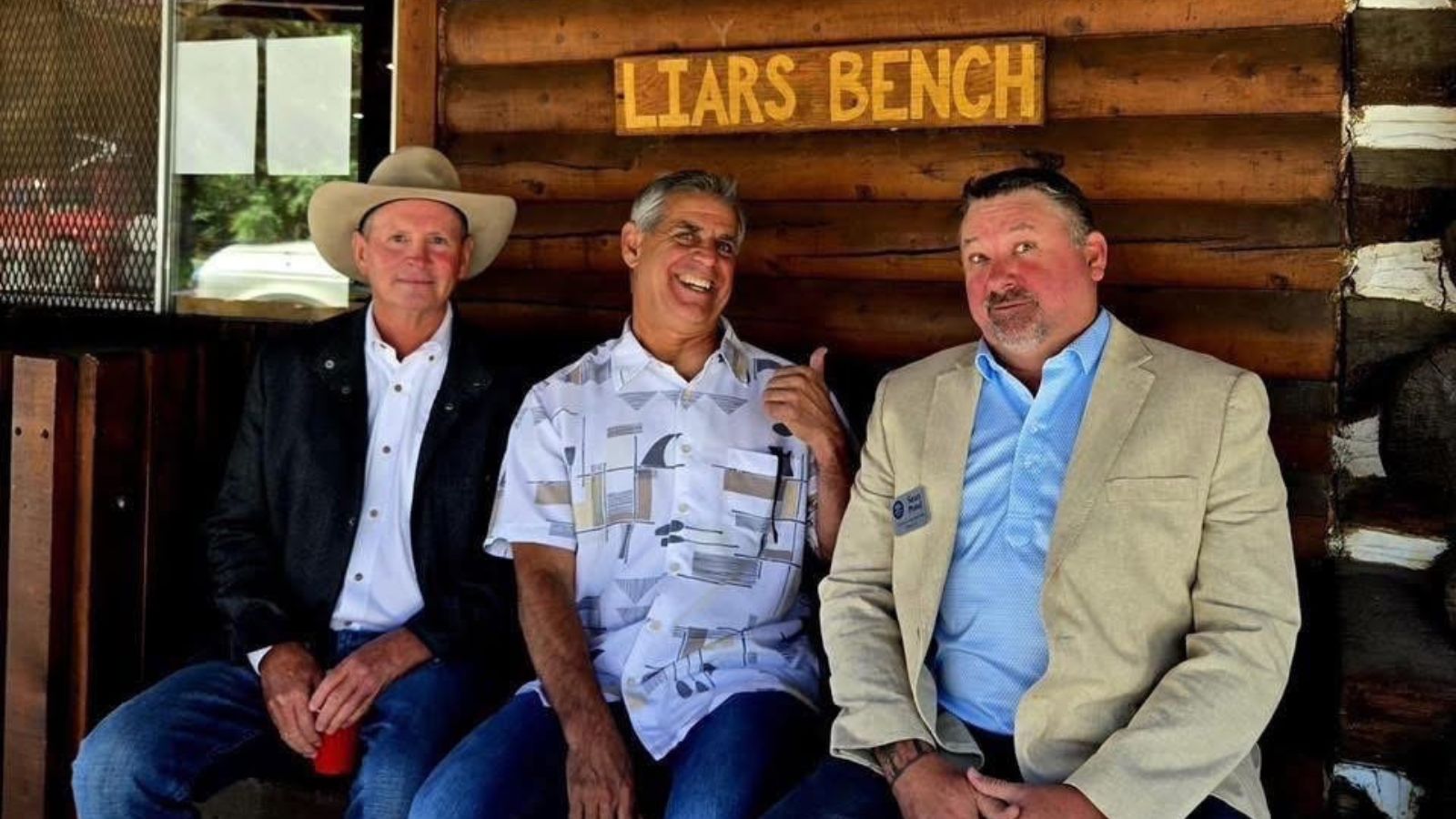
“It was part of the bigger picture,” said McDermott. Mijares shut down public comments at county commission meetings and was accused of violating Colorado’s open meeting laws by discussing county business with Pond behind closed doors. “People felt like this is all a bridge too far. Whether you’re here for one specific reason or another, all of it’s bad, and he needs to go.”
On election night, voters sent Mijares packing, replacing him with Independent candidate Kirstin Copeland, who drew strong support from across the political spectrum. After taking a few months to study the two land-use code alternatives, Copeland joined Sue Hansen in voting two to one for the community-developed code, Alternative 1.
As of now, no solar developments have been sited in Montrose County, but with so much open land and sun, there’s plenty of opportunity. And if solar developers do start looking, Montrose County’s land-use code now offers clear guidelines on what the community and developers can expect.
“None of that would have been possible without community organizing,” McDermott said. He specifically credits Jones’ efforts. In 2025, the Alliance recognized Jones with the Rawlins Award. Named after longtime Alliance member Peggy Rawlins, the award honors those who show determination, grit, and courage.
“What makes [Jones] really effective is her passion and desire to make her community a better place. She showed up to every single meeting. She was fearless in speaking truth to power.”
-Tyler McDermott, Western Colorado Alliance organizer
“What makes [Jones] really effective is her passion and desire to make her community a better place,” McDermott said. “She showed up to every single meeting. She was fearless in speaking truth to power.”
After fighting for responsible solar development rules, Jones has learned that even amid authoritarian leadership, disinformation campaigns, and ideological differences, grassroots organizing can still win. “What you don’t have in funds, you have in people,” Jones said. “You don’t need a lot of people, especially in a rural context. If you’ve got a really core group of dedicated, passionate people, you can do a lot with that.”
“The heart of organizing lies in the conversations we have with people who have different perspectives than our own but whose values align with ours,” says Michael Nelson, WORC’s campaign organizer. “Bringing those people into the process not only helps get policy over the finish line, it also makes for better policy.”
Jones hopes that the consensus she helped build around solar policy in Montrose County will translate into better, more inclusive leadership going forward.
“This hard-line, black-and-white politics stuff—that cannot be our future,” Jones said. “We have to be able to talk to each other and come to some kind of mutual agreement. Having people in leadership positions who are hard ideologues that refuse to listen to the diversity and the gamut of political voices and community voices doesn’t get us anywhere.”


Learn more:
The Local Land-use Policies Powering Colorado’s Renewable Energy Transition
Incentivizing Clean Energy with a Community Benefit Agreement
Dakota Rural Action wins solar battle against investor-owned Black Hills Energy

Yes, I want to help WORC elevate Western voices and hold decision-makers accountable!